
TL;DR: Acquiring a Welsh football club requires rigorous due diligence across five domains: financial health (Companies House filings, hidden debts), FAW/UEFA licensing compliance, ground tenure and facility condition, community stakeholder mapping, and regulatory approval. With Cymru Premier club valuations ranging from £150K to £3M+ and the league expanding to 16 clubs in 2026/27, the window for well-prepared investors is open — but undisciplined entries fail quickly.
The Market Context
The Cymru Premier's expansion from 12 to 16 clubs in the 2026/27 season, combined with the Wrexham effect driving 30-50% growth in visibility and attendance, has drawn unprecedented investor attention to Welsh football. International enquiries — particularly from American, Middle Eastern, and Scandinavian investors — have increased markedly since 2023.
But entering this market without rigorous due diligence is a recipe for costly surprises. Welsh football clubs are typically structured as small limited companies with thin administrative teams, informal governance, and financial records that vary widely in quality. The clubs that have changed hands successfully share a common feature: the buyer did thorough homework before committing.
This guide provides a structured framework for that homework, organised around the five due diligence workstreams that matter most.
Key Market Statistics
| Metric | Value | Source |
|---|---|---|
| Average Cymru Premier attendance | 400-600 | Welsh Football Historical Data Summary |
| Highest revenue club (TNS) | £3.2M | Companies House filings |
| TNS squad value | £2.5M | Transfermarkt, March 2026 |
| Average club valuation | £650K | Cymru Connect research |
| Lowest entry-point valuation | ~£150K | Cymru Connect research |
| Broadcast revenue per club | £80-120K | FAW distribution estimates |
| FAW licensing-compliant clubs | 8 of 12 | FAW/UEFA licensing status, 2026 |
| League expansion | 12 to 16 | FAW announcement, 2026 |
| Average transfer fee range | £0-50K | Transfermarkt, 2026 |
For club-by-club financial profiles, see the Club Investment Profiles and Club Valuations.
Workstream 1: Financial Due Diligence
Companies House Filings
Every Cymru Premier club operates as a limited company registered at Companies House. This is the starting point for financial due diligence. Key documents to review:
- Annual accounts (at least 3-5 years of filing history)
- Confirmation statements (director and shareholder details)
- Charges register (any secured debts or liens)
- Filing history (late filings indicate governance issues)
For a detailed guide to interpreting these filings, see our Companies House Filings analysis.
What to Look For
| Financial Indicator | Green Flag | Red Flag |
|---|---|---|
| Revenue trend (3-year) | Stable or growing | Declining >10% year-on-year |
| Wage-to-revenue ratio | Below 65% | Above 80% |
| Net assets | Positive | Negative (technical insolvency) |
| Creditor days | Under 60 | Over 90 |
| Director loans | Minimal, documented | Large, undocumented, or circular |
| Filing punctuality | On time | Repeated late filings |
| Outstanding charges | None or discharged | Active, undischarged charges |
Hidden Liabilities
Welsh football clubs frequently carry liabilities that do not appear in headline accounts:
- Deferred wages: Players or staff owed back pay under informal arrangements
- Tax arrears: PAYE, NIC, or VAT liabilities that accumulate during cash-flow crises
- Ground maintenance obligations: Contractual commitments to maintain facilities to specific standards
- Pension obligations: Rare at semi-professional level but worth confirming
- Contingent transfer clauses: Sell-on percentages or future fees owed to previous clubs for current squad members
A competent football accountant (several UK firms specialise in lower-league football) should review the full financial picture, not just the filed accounts.
Revenue Verification
Claimed revenue figures should be verified against primary sources. The Revenue Breakdown provides league-wide benchmarks:
| Revenue Stream | Typical Range | Verification Method |
|---|---|---|
| Broadcast (FAW/S4C) | £80-120K | FAW confirmation letter |
| Matchday | £40-150K | Turnstile data, ticket pricing analysis |
| Commercial/Sponsorship | £30-500K+ | Sponsor contracts, invoice records |
| Player trading | £0-200K | Transfer agreements, sell-on clauses |
| Grants | £0-250K | Grant award letters, conditions |
Workstream 2: FAW and UEFA Licensing
Why Licensing Matters
FAW licensing determines whether a club can compete in the Cymru Premier and, critically, whether it qualifies for European competition. A club that fails licensing requirements faces:
- Exclusion from European qualification (forfeiting £50-200K+ in potential revenue)
- Potential relegation or points deductions
- Loss of broadcast revenue share
- Reputational damage affecting sponsorship and supporter confidence
Currently, only 8 of 12 Cymru Premier clubs fully meet licensing standards. The remaining four operate under conditional licences or time-limited exemptions. See the FAW Licensing Requirements for the full criteria.
Key Licensing Criteria
| Category | Requirement | Common Gap |
|---|---|---|
| Sporting | Youth development programme | Insufficient academy structure |
| Infrastructure | Ground grading to FAW/UEFA standard | Floodlight or capacity shortfall |
| Personnel | Qualified coaching staff, club secretary | Missing UEFA-licensed coaches |
| Legal | Company registration, insurance | Lapsed insurance policies |
| Financial | Proof of solvency, no overdue debts | Tax arrears, unpaid wages |
UEFA Ground Requirements
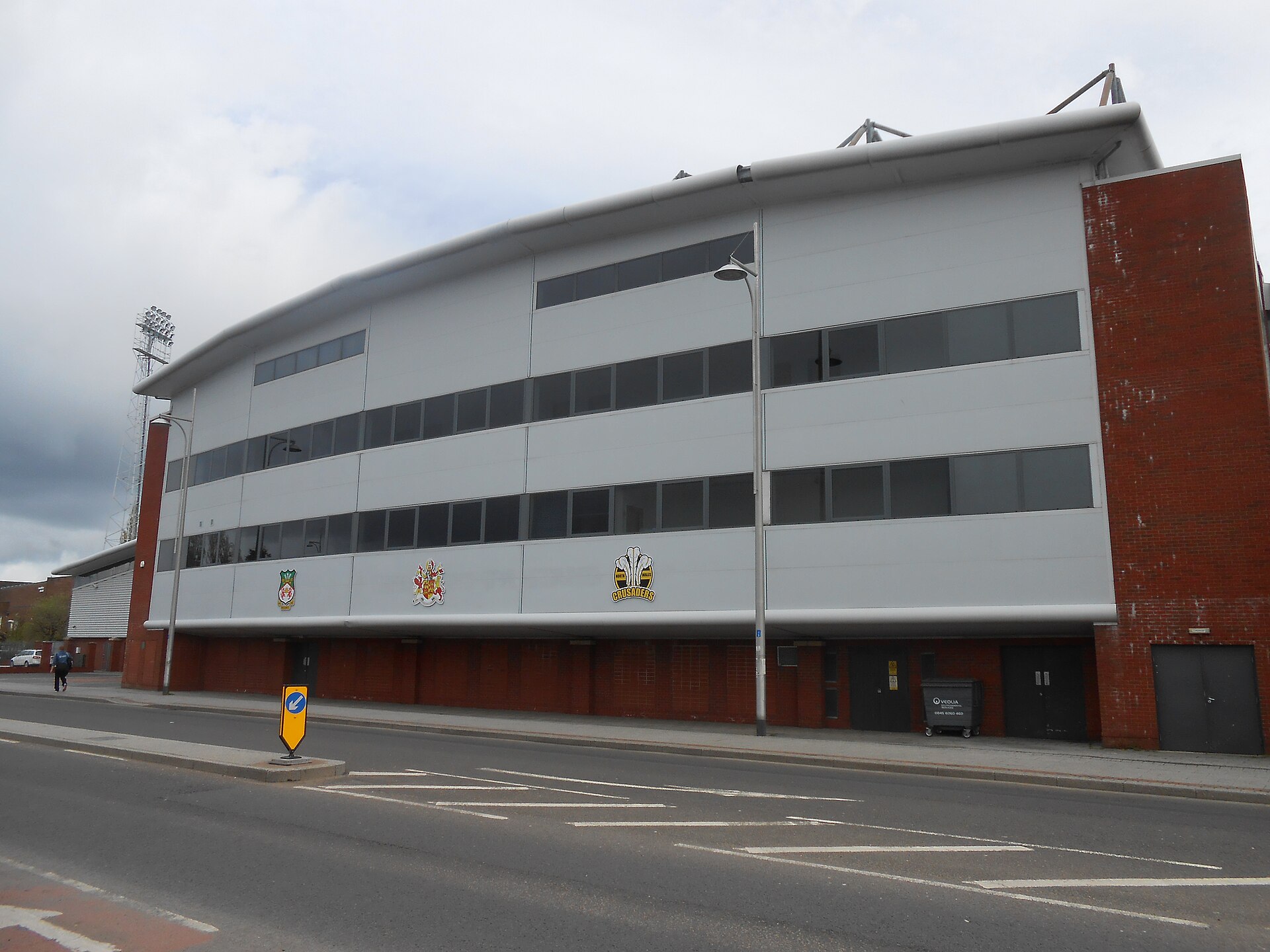
For European home matches, grounds must meet UEFA criteria that exceed standard FAW requirements. These include minimum seating capacity, floodlight lux levels, broadcast infrastructure, and media facilities. Most Cymru Premier clubs cannot currently host European matches at their home ground and instead use neutral venues — which sacrifices home advantage and gate revenue. Investors planning to pursue European qualification should budget for ground improvements. See the UEFA Stadium Licensing and Stadium Guide for specifications.
Workstream 3: Ground and Facility Assessment
Ownership vs Lease
The single most important facility question is: who owns the ground? Welsh football clubs' ground arrangements fall into three categories:
| Arrangement | Implications | Prevalence |
|---|---|---|
| Freehold | Full control, can invest freely | Rare |
| Long lease | Security for investment, some restrictions | Common |
| Council licence | Vulnerable to policy changes, limited investment | Common |
A club operating on a short-term council licence has limited ability to justify capital investment in facilities. Conversely, a freehold or long-lease club can invest in artificial pitches, hospitality upgrades, and floodlight installations with confidence that the investment will be retained. For the full analysis, see Property Ownership vs Lease.
Facility Condition Survey
Commission an independent condition survey covering:
- Pitch quality and drainage (natural grass or artificial surface condition)
- Spectator facilities (seating, standing areas, accessibility compliance)
- Floodlights (lux levels, age, compliance with ground grading requirements)
- Clubhouse and hospitality (commercial revenue potential)
- Training facilities (on-site or partnership arrangements)
- Safety certificate (current, compliant with local authority requirements)
Capital Expenditure Benchmarks
| Facility Investment | Typical Cost | Annual Revenue Impact |
|---|---|---|
| 4G artificial pitch | £400-600K | £30-50K (hire income) |
| Floodlight upgrade (LED) | £80-150K | Enables evening fixtures |
| Clubhouse/hospitality upgrade | £100-250K | £20-40K (events, hire) |
| Spectator seating (500 seats) | £150-300K | Enhanced matchday experience |
| Training ground development | £200-500K | Player recruitment advantage |
See the Infrastructure Investment Guide and Stadium Development ROI for detailed cost-benefit analysis.
Workstream 4: Community and Stakeholder Mapping
Why Community Matters
Welsh football clubs are community institutions. The supporter base, volunteer network, and local council relationship are not peripheral concerns — they are core operational assets. A club with 500 regular attendees from a town of 5,000 has a fundamentally different proposition from a club with 500 attendees from a city of 200,000.
Stakeholder Groups
| Stakeholder | Assessment Questions |
|---|---|
| Supporters' trust/group | Does one exist? What influence does it hold? |
| Volunteer network | How many volunteers? What roles do they fill? |
| Local council | What is the relationship? Any funding or facility support? |
| Local businesses | Which businesses sponsor? How long-standing? |
| FAW relationship | Any outstanding compliance issues? |
| Media | Local press coverage quality and frequency? |
| Community groups | Youth teams, schools partnerships, disability access? |
The Community Ownership Question
Several Welsh football clubs operate under or have considered community ownership models. Even where a club is not community-owned, the supporter base may have strong views about governance and identity. Investors who announce plans without community consultation face backlash that can damage attendance, sponsorship, and volunteer support.
Best practice is to engage the supporters' trust or equivalent body early in the acquisition process, articulating a vision that aligns with community values while being transparent about commercial intentions.
Workstream 5: Regulatory and Legal
FAW Approval
Any change of control at a Cymru Premier club requires FAW notification and, in practice, approval. The FAW's "fit and proper person" test evaluates:
- Criminal record (unspent convictions)
- Bankruptcy history
- Previous involvement in football club insolvency
- Source of funds
- Business plan viability
Company Law
Standard company acquisition procedures apply: share purchase agreement, warranties and indemnities, completion accounts, and director appointments. Given the small scale of most transactions (£150K-£3M), legal costs are typically £10-30K for a straightforward acquisition.
Employment Law
Players and staff at semi-professional clubs often operate under non-standard employment arrangements — some on PAYE, others on self-employed contracts, some on informal verbal agreements. An incoming owner must clarify the employment status of every individual to avoid HMRC exposure and ensure compliance with employment rights legislation.
Data Protection
Clubs hold supporter data (membership lists, email databases, payment details) that falls under UK GDPR. Ensure data processing is compliant and that data assets transfer lawfully as part of the acquisition.
The Due Diligence Checklist
| Area | Key Action | Priority |
|---|---|---|
| Financial | 3-5 year accounts review, hidden liability search | Critical |
| Licensing | Confirm FAW/UEFA status, identify gaps | Critical |
| Ground | Tenure verification, condition survey | Critical |
| Community | Stakeholder mapping, trust engagement | High |
| Legal/Regulatory | FAW approval, employment audit | High |
| Commercial | Sponsor contract review, revenue verification | High |
| Sporting | Squad valuation, contract review, academy audit | Medium |
| Digital | Website, social media, digital presence audit | Medium |
Common Mistakes
Overpaying for underperforming assets. Club valuations in the Cymru Premier range from £150K to £3M+. The Club Valuations report provides benchmarks — do not rely on the seller's valuation alone.
Ignoring ground tenure. An investor who spends £500K on facility upgrades at a ground with a 3-year council licence is taking an unacceptable risk. Secure tenure before committing capital.
Underestimating community dynamics. Welsh football communities are tight-knit and vocal. Investors perceived as extractive or disrespectful to club traditions will face resistance that undermines the commercial plan.
Assuming English football norms apply. The Welsh football pyramid, FAW governance, and broadcasting landscape differ materially from the English system. What works at a National League club may not translate to the Cymru Premier.
Neglecting the commercial gap. Most Cymru Premier clubs are commercially underdeveloped. The first hire should almost always be a commercial manager — the revenue uplift typically covers the cost within 12 months.
Timeline: From Interest to Completion
| Phase | Duration | Key Activities |
|---|---|---|
| Initial research | 2-4 weeks | Market overview, target identification |
| Preliminary discussions | 4-8 weeks | Seller engagement, NDA, information request |
| Due diligence | 6-12 weeks | Financial, legal, facility, community review |
| Negotiation | 4-8 weeks | Valuation, terms, SPA drafting |
| FAW approval | 4-6 weeks | Fit and proper person, business plan submission |
| Completion | 1-2 weeks | Share transfer, director appointments |
| Total | 5-9 months |
Conclusion
Buying a Welsh football club is not a trophy acquisition in the Premier League sense — it is a micro-business investment with community obligations, regulatory requirements, and sporting uncertainty. But for investors who approach it with discipline, the Cymru Premier offers genuine value: Europe's cheapest UEFA-pathway league, structural tailwinds from expansion and the Wrexham effect, and clubs where modest investment can deliver measurable returns.
The due diligence process described here is the difference between a successful acquisition and an expensive lesson. For individual club profiles, start with the Club Investment Profiles. For return projections, see the Investment Returns Analysis. And for international comparisons, consult the Global Benchmarking report.
Source & Methodology
This guide is informed by Cymru Connect's analysis of Companies House filings across all Cymru Premier clubs, FAW licensing documentation, Sport Wales facility reports, and interviews with football industry solicitors, accountants, and club officials. Valuation ranges are based on publicly available transaction data and Cymru Connect's proprietary modelling. The guide is intended as a framework for professional due diligence and does not constitute legal or financial advice. Investors should engage qualified advisers before proceeding with any acquisition.