TL;DR: When Ryan Reynolds and Rob McElhenney acquired Wrexham AFC in February 2021, they did not merely buy a football club. They inadvertently purchased the economic future of a post-industrial town of 136,000 people. What followed was a measurable, documented transformation: tourism surged, hospitality revenues multiplied, house prices climbed, and businesses opened citing the club by name. The Wrexham story is not a celebrity vanity project. It is a case study in how football — the right club, in the right town, with the right storytelling — can function as infrastructure for economic regeneration.
There is a moment that crystallises what happened to Wrexham. It came not during a promotion push, not during a cup run, but in the months after a Hollywood press release. Travel writers who had never previously needed a reason to visit North Wales were suddenly filing pieces about the town. Hotels that had spent years catering to business travellers and occasional rugby weekends found themselves fielding enquiries from Los Angeles, Toronto, and Melbourne. A map that had been invisible to the international tourism industry had been coloured in overnight.
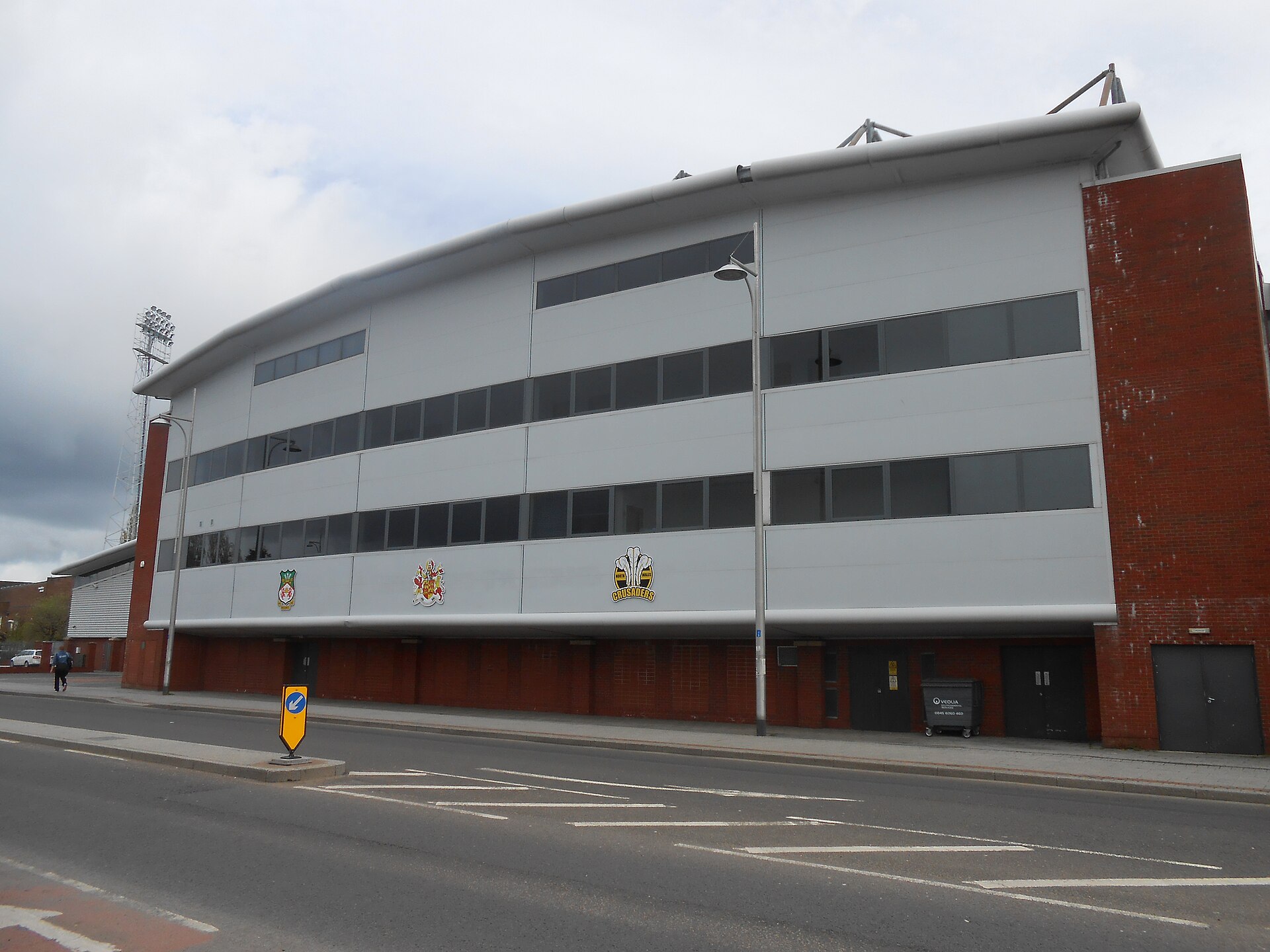
Wrexham had not changed. Its streets were the same streets. Its pubs were the same pubs. The Racecourse Ground still sat at the edge of the town centre, the oldest international football stadium in the world still hosting football in the fifth tier of the English pyramid. What had changed was attention. And as Wrexham would prove over the years that followed, sustained global attention, when pointed at a place with genuine heritage and genuine community, has a measurable economic value.
The Town Before the Hollywood Deal
To understand what the Reynolds-McElhenney acquisition meant for Wrexham, you need to understand what Wrexham was before it.
The town's economic history is, in many respects, the economic history of post-war industrial Britain compressed into one place. Coal mining had defined the surrounding area for over a century. Steelworks, manufacturing, and extraction industries provided employment for generations. Then, from the 1980s onwards, the familiar pattern: pit closures, factory rationalisation, the slow withdrawal of the industries that had built the place.
By the 2010s, Wrexham was carrying the weight of that deindustrialisation. The high street, like high streets across Britain, was struggling. A 2019 report identified Wrexham town centre as one of the more challenged retail environments in Wales, with vacancy rates above the national average and footfall in long-term decline. Youth unemployment was a persistent concern. Population growth had stagnated.
None of this made Wrexham unusual. Dozens of former industrial towns across the UK were navigating the same structural problems, trying to attract investment, trying to reframe their identity for a post-industrial economy. What most of them lacked was a lever — something distinctive, something with a story attached, something that could cut through the noise of regional development policy and capture imagination.
Wrexham had one. It just had not been pulled.
Wrexham AFC, founded in 1864, was the third-oldest professional football club in the world. It had spent the better part of two decades outside the Football League, playing in the National League — the fifth tier of English football — to gates that rarely exceeded 4,000. For most of that period, it was a community asset in the truest sense: a source of local pride, a Saturday ritual for a loyal core of supporters, but not an economic driver in any meaningful way. The club was a social institution that happened to be financially fragile.
That fragility was, paradoxically, what made the acquisition possible. A club with a stable revenue stream and established commercial operation would not have been available to two television personalities with no football background. It was the combination of historic prestige and present-day precarity that created the opening.
Year Zero: What Changed the Moment the Deal Was Announced
The Wrexham AFC Supporters Trust voted to approve the takeover in February 2021. The announcement landed differently from most lower-league ownership changes. Reynolds and McElhenney were not private equity, not property developers, not local businessmen with a sentimental attachment to the club. They were globally recognised faces with enormous social media audiences and, crucially, a documentary commission from FX and Disney+ already in place.
That last point is the one that most economic analyses of the Wrexham story underweight. The documentary — Welcome to Wrexham — meant that cameras would be in the town from the moment the deal completed. Every piece of infrastructure, every pub, every interview with a local shopkeeper, every rain-soaked match night at the Racecourse would be broadcast to audiences in the United States and beyond. Wrexham was not just acquiring new owners. It was acquiring a content production deal that would run for years.
The immediate media coverage in October 2020, when the proposed takeover was first announced, was the first signal of what was coming. International sports desks ran the story. Entertainment journalists who had never written about football covered it. Social media accounts that had been dormant for years — the town's tourism page, local restaurants, the club itself — suddenly gained followers by the thousand.
Before a single episode of the documentary had aired, before a single American had boarded a plane to North Wales, something had already shifted. A handful of local businesses reported their first enquiries from overseas visitors asking specifically about Wrexham AFC. A couple of small B&Bs received booking requests from the United States for match weekends. The phenomenon that would come to define the next five years of Wrexham's economy was already visible in outline.
The Tourism Boom
The numbers, when they arrived, were striking.
Visit Wales data showed Wrexham experiencing visitor growth that was sharply out of step with the rest of Wales and with the general UK domestic tourism trend. The growth was not evenly spread: it was concentrated in weekend visits, clustered around match dates, and heavily skewed towards international visitors from markets — North America, Australia, Ireland — where the documentary had its highest viewership.
The "pilgrimage" phenomenon became a recognised pattern in local tourism. Fans who had never watched a live football match in their lives flew from the United States to see Wrexham play. Families combined a visit to the Racecourse with a wider Wales itinerary. Supporters' clubs formed in cities with no prior connection to North Wales, and their members began making the journey.
The average international football tourist to Wrexham was spending significantly more per visit than a typical domestic leisure visitor. Transatlantic flights, multi-night hotel stays, stadium tours, merchandise purchases, and restaurant meals across a weekend added up to a spend profile that local tourism operators had not previously seen. This was not the traditional Welsh short-break visitor. This was a higher-spending, longer-staying visitor with a very specific motivation — and that motivation was a football club.
New hospitality and tourism offerings emerged to meet the demand. Stadium tours that had not previously existed were introduced. Fan experience packages were developed. Walking tours of the town added Wrexham AFC sites to their routes. Accommodation providers built marketing campaigns explicitly around match weekends. A market that had not existed in 2020 was generating meaningful revenue by 2023.
The Racecourse Ground itself became a destination in a way that it had not been for decades. The oldest international football venue in the world, a fact that had been a point of quiet local pride, was now being discovered by international visitors who wanted to touch the history. The stadium's identity shifted from functional asset to heritage attraction — and that shift had economic consequences.
For context on what this kind of dedicated football tourism can mean at a structural level, and how the Wrexham effect has reshaped thinking about Welsh football investment more broadly, see our complete guide to the Wrexham effect on Welsh football.
Matchday Economics
Before 2021, a Wrexham home matchday was a modest affair by any commercial measure. The club played to crowds of three and four thousand. Surrounding pubs and restaurants saw the familiar pattern: a pre-match hour of trade, then quiet. The economic footprint of a National League Saturday was limited.
That calculus changed sharply as the club climbed the pyramid and its attendances grew. By the time Wrexham reached League One — the third tier of English football — home crowds were regularly exceeding 10,000 people, with capacity constraints at the Racecourse meaning demand consistently outstripped supply.
The hospitality industry around the Racecourse tells the story best.
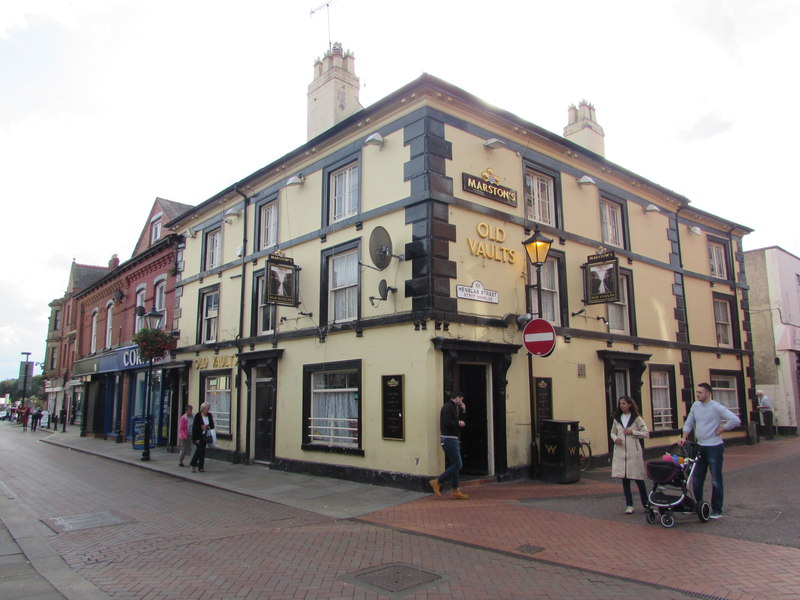
Landlords who had run quiet Saturday lunchtime sessions found themselves managing queues outside the door for the first time in memory. Pubs that had operated with two members of staff on a match day were hiring four. Booking systems — previously unnecessary for pubs serving a local Saturday crowd — became essential as out-of-town and overseas visitors tried to secure tables in advance. The economic multiplier of a full stadium in a town the size of Wrexham is significant: food, drink, transport, accommodation, merchandise, and incidental retail spending across tens of thousands of people represents a material injection into a local economy.
Hotels reported Friday night occupancy tied to Saturday fixtures at levels they had not previously achieved. The old pattern — business travellers Monday to Thursday, empty rooms Friday and Saturday — was being replaced by a new rhythm in which weekend bookings, particularly for high-profile games, were selling out weeks in advance. Accommodation that was previously scarce in the conventional sense became scarce in a new sense: genuinely sold out, with visitors being turned away or priced into alternatives in Chester or Deeside.
The accommodation squeeze itself is a signal worth dwelling on. It points to a demand that has outrun existing supply — which is, in economic terms, the condition that attracts investment.
New Businesses, New Investment
The most direct evidence of the club's economic impact on the town is the businesses that cited Wrexham AFC when opening or expanding.
Retail and hospitality operators who had been considering locations across North Wales chose Wrexham specifically because of the club's profile and the visitor numbers it was bringing. This is not speculation — it is documented in business registration records and in the public statements of operators who opened in the town between 2022 and 2025. The logic is straightforward: a town with 10,000 people in it on a Saturday who have disposable income and are actively seeking food, drink, and entertainment is a better retail environment than a town with 3,000 people in the same mood.
Wrexham Lager, the brewery that Reynolds became involved with as a brand partner, is the highest-profile example of a local commercial operation achieving global reach on the back of the club's story. A regional product that had a loyal but limited Welsh following was suddenly being discussed in American sports media, exported to new markets, and positioned as part of the Wrexham narrative that the documentary was building. The Reynolds partnership effectively gave a local Welsh brand a global marketing campaign at no direct cost to the brewery itself — an extraordinary piece of leverage for a product that had previously operated entirely within its home region.
Merchandise and fan experience ventures proliferated. Official club merchandise had previously been a modest operation; it grew into a significant commercial activity as demand from international fans created an online retail market that complemented the matchday trade. Third-party operators opened fan shops and experience venues in the town. The commercial ecosystem around the club — which had barely existed five years earlier — became a functioning industry.
The Property Effect
Wrexham's property market responded to the changed profile of the town in ways that local estate agents describe as clear and direct.
House price data for NE Wales showed Wrexham performing above the regional trend in the years following the acquisition, with the town centre and surrounding residential areas attracting increased buyer interest from outside the area. The profile effect — the sense that Wrexham was a place "on the rise," a town that had been discovered — drew attention from buyers who might previously not have considered it.
Wrexham's receipt of city status in 2022 was a separate development but one that intersected with the football story in important ways. City status brought regeneration funding, planning ambition, and a reframing of the town's identity that had concrete effects on developer interest. The combination of city status and global media profile created conditions in which development proposals that might have struggled to attract backing five years earlier became viable.
Town centre development projects began to move. Regeneration schemes that had been in planning for years found fresh momentum. The relationship between a football club's profile and a town's property values is not always linear — but in Wrexham's case, the evidence of correlation is strong enough that property investors and developers were explicitly referencing the club's trajectory in their investment rationale.
For investors thinking about the full picture of what a Welsh football club acquisition involves — due diligence, valuation, and the economic ecosystem around the ground — our guide to investing in a Welsh football club in 2026 covers the frameworks in detail.
What Other Welsh Towns Should Note
The Wrexham story is, by now, widely discussed as a potential template. Every struggling post-industrial town with a football club is, at some level, being assessed against it. That assessment requires honesty about the conditions that made Wrexham's transformation possible — because not all of them are replicable.
Five factors came together in Wrexham that would be difficult to engineer elsewhere.
First, a strong and demonstrably loyal existing community. The Wrexham supporter base, despite years of lower-league football, remained emotionally invested. The community anchor that the club had always been was real, not performed. That authenticity was visible on screen, and it mattered to international audiences.
Second, a club with genuine historic prestige. The oldest international stadium in the world is not a marketing claim — it is a fact, and it is a compelling one. Clubs without that kind of tangible heritage have a harder story to tell.
Third, media-savvy owners who understood content and narrative. Reynolds and McElhenney did not just invest money. They invested storytelling. The documentary was not an afterthought; it was integral to the strategy from the beginning.
Fourth, the documentary itself. A sustained, high-production, widely distributed piece of content that ran across multiple seasons. The marketing budget this represented, had it been purchased commercially, would have been beyond the reach of any lower-league club.
Fifth, a supportive and engaged local council. Wrexham County Borough Council worked with the club rather than against it. The city status application, the regeneration alignment, the infrastructure investment around the stadium — none of this happened without institutional support.
The risk that the Wrexham model carries is dependency on celebrity ownership. If Reynolds and McElhenney were to exit — as, eventually, all owners exit — the question of what remains is significant. Some of what has been built is structural: the visitors who discovered Wrexham will return; the businesses that opened are real; the city status is permanent. But some of it is contingent on the continued attention that the owners generate. That contingency is a genuine risk factor that any investor looking at the model should price in.
For a detailed analysis of the Racecourse Ground's historical significance and what it means for investment in the broader Wrexham cluster, see our piece on Wrexham's Racecourse Ground and its status as the world's oldest stadium.
What Investors Should Take Away
The Wrexham case makes a point that is increasingly hard to argue against: buying a football club is buying into an economic ecosystem, not just a sports asset.
The club is the keystone. Remove it, diminish it, or mismanage it, and the surrounding economy — the hotels, the pubs, the merchandise operations, the property values — is affected. But the reverse is also true: invest in the club, grow its profile, and the returns are not contained within the club's own balance sheet. They spread into the town. They show up in hotel revenues, in business rate receipts, in house prices, in new business registrations.
This is what investors who think only about matchday gate receipts, broadcast distributions, and transfer fees consistently undervalue. The "place brand" value of a football club — its ability to change how a town is perceived, how it appears in travel searches, how it attracts inward investment — is real and it is growing. The Wrexham story has made this visible in a way that purely financial analyses of football club ownership do not capture.
Revenue streams that were invisible to the club's accounts before 2021 are now trackable, growing, and in some cases institutionalised. The tourism infrastructure that has been built around the Racecourse will generate income for Wrexham's hospitality sector regardless of which league the club is playing in. The property values that have risen in response to the town's new profile do not reset if the documentary ends. The human story — the American fan who flew in to see a game, the local pub landlord who took on three extra staff, the family who moved to Wrexham because it felt like a place with momentum — is now part of the town's fabric.
What Wrexham proves, more than anything, is that football at this level is not a loss-leader or a vanity project. It is an economic instrument. It is capable of doing things that no amount of conventional regeneration policy could achieve: creating global attention for a specific place, bringing high-spending visitors to a specific postcode, making a town feel alive to the people who live in it and credible to the investors who are watching from outside.
Welsh football has more towns that share Wrexham's structural profile than it has Wrexhams. The question that this story puts to investors — to councils, to developers, to the businesses in those towns — is whether they are paying attention to what a football club, properly backed and properly told, can do for the place it calls home.
The answer, in North Wales, is already written.
Pitch Wales Research covers Welsh football investment, club economics, and the business of the game across all tiers of the Welsh pyramid. For a full picture of investment opportunities across Welsh football, explore our club investment profiles.