
TL;DR: North Wales clubs hold 17 combined league titles, higher squad values, and stronger commercial revenue driven by cross-border economics and TNS's dominance. South Wales clubs counter with superior academy integration — Cardiff Met leads at 45% academy minutes — larger catchment populations, and lower acquisition costs. The two corridors represent fundamentally different investment profiles.
Two Corridors, Two Investment Theses
The Cymru Premier's geography splits neatly along the A470 corridor into two distinct investment markets. This is not merely a cultural or linguistic divide — it produces measurably different financial profiles, talent pipelines, and commercial dynamics. Understanding these regional differences is essential for any investor evaluating Welsh football.
North Wales clubs — TNS, Connah's Quay Nomads, Caernarfon Town, and Bala Town — benefit from proximity to the English border, cross-border player recruitment, and the presence of TNS as the league's dominant financial and competitive force. South Wales clubs — Barry Town United, Penybont, Cardiff Met, and Haverfordwest County — lean on academy pathways, larger urban catchments, and development-led operating models that prioritise sustainability over title challenges.
For individual club analyses, see the Club Investment Profiles.
Financial Comparison: The Regional League Table
| Metric | North Wales Clubs | South Wales Clubs |
|---|---|---|
| Combined League Titles | 17 (TNS 15, CQ 2) | 7 (Barry Town 7) |
| Highest Revenue | £3.2M (TNS) | £1.4M (Penybont/Haverfordwest) |
| Average Revenue | ~£1.8M | ~£1.1M |
| Highest Squad Value | £2.5M (TNS) | ~£800K (Penybont est.) |
| Average Attendance | 500-820 | 350-550 |
| UEFA Licences Held | 4/4 | 4/4 |
| Artificial Pitch Adoption | 100% | 75% |
The financial gap is stark: TNS alone generates £3.2M in revenue, nearly triple the highest-earning South Wales club. However, this concentration is also a vulnerability — northern dominance is heavily dependent on a single club's continued investment and European success.
Northern Powerhouse: Cross-Border Economics
North Wales clubs operate within an economic corridor that extends into Merseyside, Cheshire, and Shropshire. This geographic advantage manifests in several ways.
TNS: The League's Financial Benchmark
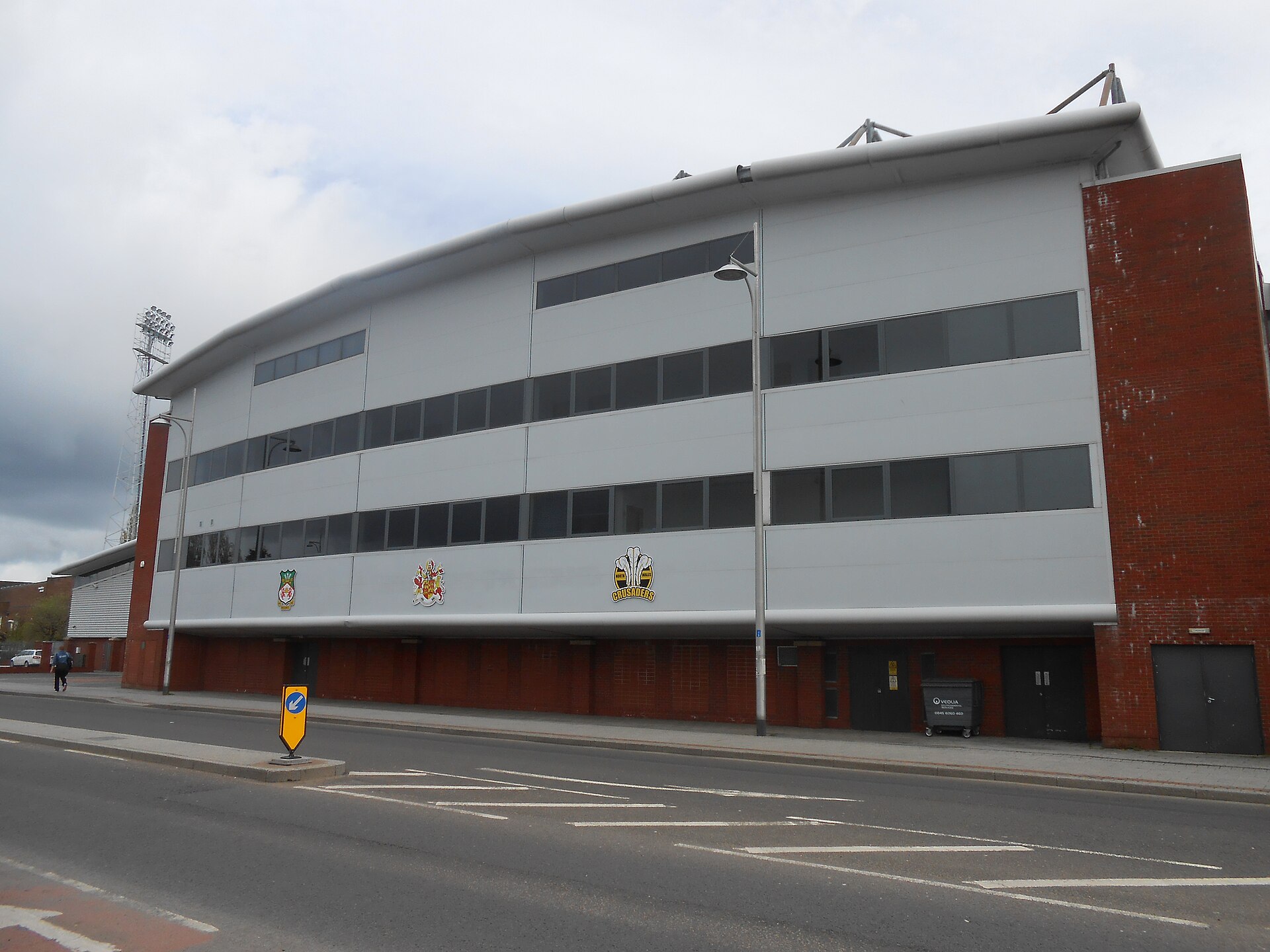
TNS remains the Cymru Premier's financial outlier. Their £3.2M revenue, £2.5M squad value, and 15+ league titles place them in a category of their own. Park Hall's 2,034-seat capacity hosts an average attendance of around 620 — low relative to capacity, but high by league standards. The club's full-time professional setup, funded primarily through owner investment and European prize money of £50-200K per campaign, creates a financial model that no other Welsh club currently replicates.
For a detailed analysis of TNS's finances and competitive position, see the TNS Investment Profile.
Connah's Quay Nomads: European Revenue as Growth Engine
Connah's Quay have leveraged European competition more effectively than any club outside TNS. Their £1.8M revenue is supported by Deeside Stadium's 2,500 capacity and a location that draws supporters and players from across the North Wales-Cheshire border. Two league titles in recent seasons have reinforced the club's credentials as TNS's principal challenger.
The Nomads' model demonstrates how European qualification transforms club economics — a dynamic explored in our European Qualification analysis.
Caernarfon Town: The Attendance Leader
Caernarfon's average attendance of approximately 820 is the highest in the Cymru Premier, driven by strong community engagement and The Oval's 3,000-seat capacity. Despite a more modest £800K revenue, Caernarfon's matchday economics punch above their weight. The club's passionate Welsh-speaking fanbase creates a unique cultural asset that investors should not underestimate.
See the Caernarfon Town Investment Profile for more detail.
Bala Town: Heritage and Resilience
Founded in 1880, Bala Town is one of the oldest clubs in the Cymru Premier. Their £700K revenue and Maes Tegid's 3,000 capacity support a semi-professional model that has sustained competitive football in the Gwynedd town for nearly 150 years. Bala's investment case rests on heritage value and community ownership potential — themes explored in our History and Heritage Value report.
Southern Renaissance: Development-Led Models
South Wales clubs have historically played second fiddle to the North in terms of league titles and financial firepower. However, the region's investment case has strengthened considerably in recent years, driven by innovative operating models and structural advantages that northern clubs do not share.
Cardiff Met: The University Model
Cardiff Met's integration with Cardiff Metropolitan University creates a financial and talent model unique in Welsh football. The club's wage-to-turnover ratio of 36% — far below the league average — reflects the university's subsidy of facilities, coaching infrastructure, and player education. With 45% of match minutes going to academy products, Cardiff Met demonstrates that competitive football can be delivered at a fraction of the cost of full-time professional models.
| Cardiff Met Metrics | Value |
|---|---|
| Revenue | £1.1M |
| Wage-to-Turnover Ratio | 36% |
| Academy Minutes | 45% |
| Stadium Capacity | 2,000 |
| Operating Model | University-integrated |
This model has clear limitations — it is unlikely to produce consistent title challenges — but for investors interested in sustainable, low-risk football operations, it is arguably the most instructive example in the league. Our Cardiff Met Football Model deep-dive covers the full picture.
Penybont: The New Entrant Advantage
Founded in 2019, Penybont is the youngest club in the Cymru Premier and arguably the most commercially dynamic. Their £1.4M revenue — achieved in under seven years of existence — demonstrates the potential for well-managed new entrants to compete financially with established clubs. SDM Glass Stadium's 2,500 capacity and artificial pitch provide the infrastructure base, while the club's location in the Bridgend area gives access to a catchment population significantly larger than most northern rivals.
The Penybont Investment Profile provides a comprehensive analysis of their growth trajectory.
Barry Town United: Historical Pedigree
Barry Town's seven league titles and European pedigree make them the most decorated club in South Wales. Founded in 1912, the club's Jenner Park (3,000 capacity) sits within the Vale of Glamorgan, offering access to Cardiff's southern suburbs. Revenue of approximately £750K reflects a club operating well below its historical ceiling — a gap that represents either risk or opportunity depending on the investor's perspective.
For historical context and current financial analysis, see the Barry Town Investment Profile.
Haverfordwest County: The West Wales Opportunity
Haverfordwest's £1.4M revenue is notable given its location in Pembrokeshire — the most geographically isolated major town in South Wales. Ogi Bridge Meadow's 3,000 capacity and 4G pitch make it one of the better-equipped grounds in the league, while the club's status as the only Cymru Premier club in West Wales gives it a monopoly on top-flight football across a significant catchment area.
The Haverfordwest Investment Profile examines the club's commercial potential in detail.
Talent Pipeline: Where the Players Come From
The North-South divide is perhaps most pronounced in player development philosophy.
| Metric | North Wales Average | South Wales Average |
|---|---|---|
| Academy Minutes % | 10-15% | 25-45% |
| Average Player Age | 26-28 | 22-25 |
| Cross-Border Signings | High | Moderate |
| University Pipeline | Low | High (Cardiff Met) |
| Transfer Fee Income | £20-50K/season | £10-30K/season |
Northern clubs recruit more aggressively across the English border, particularly from the academies of Liverpool, Everton, Chester, and Wrexham. This produces older, more experienced squads but limits the development of homegrown talent. Southern clubs, particularly Cardiff Met and Haverfordwest, invest more heavily in youth development, producing younger squads with higher academy integration.
The Welsh Football Academy Best Clubs ranking evaluates these programmes systematically, while the Talent Pipeline Guide covers the scouting landscape.
Catchment and Community Dynamics
South Wales clubs hold a significant structural advantage in catchment population. The Cardiff-Swansea-Newport urban corridor contains over 1.2 million people, compared to approximately 350,000 across the North Wales clubs' combined catchment areas. However, northern clubs have historically converted a higher percentage of their catchment into active supporters — a reflection of fewer competing entertainment options and stronger community identification with the local football club.
Our Catchment Population Analysis maps these dynamics in detail, while the Attendance Trends report tracks conversion rates over time.
Investment Implications
If You Want Title Contention
North Wales remains the clear choice. TNS and Connah's Quay have the infrastructure, revenue, and squad depth to compete for titles and European qualification. However, the entry cost is proportionally higher — particularly for TNS, whose valuation reflects 15+ years of sustained investment.
If You Want Growth Potential
South Wales offers more headroom. Clubs like Penybont and Haverfordwest are growing from lower bases, operate in larger catchment areas, and have more unactivated commercial inventory. The Club Valuations 2026 report provides current estimates.
If You Want Sustainability
The university-integrated model at Cardiff Met offers the lowest financial risk in the league, while community-owned structures in both regions provide governance frameworks that prioritise long-term viability over short-term results. See our Community Ownership guide.
If You Want European Revenue
Only North Wales clubs have consistently qualified for European competition. However, the expansion to 16 teams and the potential for UEFA coefficient improvement could open European pathways for South Wales clubs in the medium term. The European Qualification analysis models these scenarios.
Conclusion
The North-South divide in the Cymru Premier is not a barrier to investment — it is a feature that creates distinct opportunities for different investor profiles. Northern clubs offer proven commercial models, European revenue, and competitive pedigree. Southern clubs offer growth potential, academy value, and larger untapped markets. The most sophisticated investors will consider positions in both corridors to diversify across the league's geography and risk profiles.
Analysis based on Companies House filings, Transfermarkt data, FAW licensing reports, and Cymru Connect internal modelling. All financial figures are estimates based on publicly available information. Data as of March 2026.