
TL;DR: TNS generates an estimated £3.2M in revenue on a £2.5M squad — both league highs — underpinned by 15 titles, a full-time professional setup, and regular European prize money. For investors seeking the Cymru Premier's most proven asset, TNS offers stability, continental exposure, and a revenue model that no domestic rival has yet replicated.
Why TNS Matters to Investors
The New Saints Football Club is the benchmark against which every Cymru Premier investment case is measured. With fifteen league titles, the division's only full-time professional squad, and consistent European qualification stretching back over a decade, TNS operates on a financial and sporting plane that no domestic competitor currently matches. Estimated revenue of £3.2M is nearly double that of Connah's Quay Nomads (£1.8M), the next-highest earner, and more than triple the league average of approximately £900K.
For investors evaluating the Welsh football landscape, TNS represents the ceiling — the clearest demonstration of what a professionally managed, strategically positioned Cymru Premier club can achieve. For a side-by-side comparison with other leading clubs, see the Best Clubs to Invest In ranking.
Financial Overview
TNS's revenue model is built on four pillars: European prize money, commercial partnerships, broadcast distributions, and matchday income. The mix is notable for its diversity — most Cymru Premier clubs rely heavily on one or two streams, whereas TNS has built meaningful income across all four.
| Revenue Stream | Estimated Annual Value | Notes |
|---|---|---|
| European prize money | £200K–£500K | Variable by round reached; Champions League qualifiers pay more than Conference League |
| Commercial partnerships | £500K+ | Kit, stadium, training ground sponsorships |
| Broadcast distributions | £80K–£120K | S4C/Sgorio deal shared across Cymru Premier |
| Matchday income | £150K–£250K | Based on 500–800 average attendance at Park Hall |
| FAW/UEFA solidarity payments | £50K–£100K | Youth development and licensing compliance |
Revenue Trajectory
TNS's revenue has grown steadily over the past five seasons, driven primarily by two factors: increasing European prize money pools (UEFA has expanded distributions to smaller associations) and a professionalised commercial operation that has secured multi-year sponsorship deals. The club's Companies House filings show year-on-year revenue growth of approximately 8–12% since 2022.
For a detailed breakdown of how these revenue streams compare across the league, see our Revenue Breakdown analysis.
Squad and Playing Resources
| Metric | Value | Source |
|---|---|---|
| Estimated squad value | £2.5M | Transfermarkt (March 2026) |
| Squad size | 24–28 players | Club registration data |
| Full-time professionals | 100% of first-team squad | Club announcement |
| Average player age | 26.2 years | Transfermarkt |
| Wage bill (estimated) | £1.2M–£1.5M | Companies House, Cymru Connect analysis |
| Academy graduates in squad | 15% of minutes | FAW youth development reports |
TNS's £2.5M squad value is more than three times the league median, reflecting the financial gap between a full-time professional operation and the semi-professional majority. The club recruits primarily from English League One, League Two, and National League clubs — a market where experienced professionals can be acquired without competing at Championship-level transfer fees.
Recruitment Strategy
The club's recruitment pipeline is one of its most underappreciated assets. TNS consistently identifies players from England's lower professional tiers who are willing to relocate for guaranteed first-team football and European competition. This approach delivers three advantages:
- Cost efficiency: Transfer fees are minimal (often free agents), with the investment concentrated in wages.
- Experience level: Players arrive with professional backgrounds, reducing development risk.
- European motivation: The prospect of annual European qualification is a genuine attraction for players who might otherwise remain in England's non-league system.
For broader context on squad values across the division, see our Squad Values and Wages analysis.
Infrastructure: Park Hall
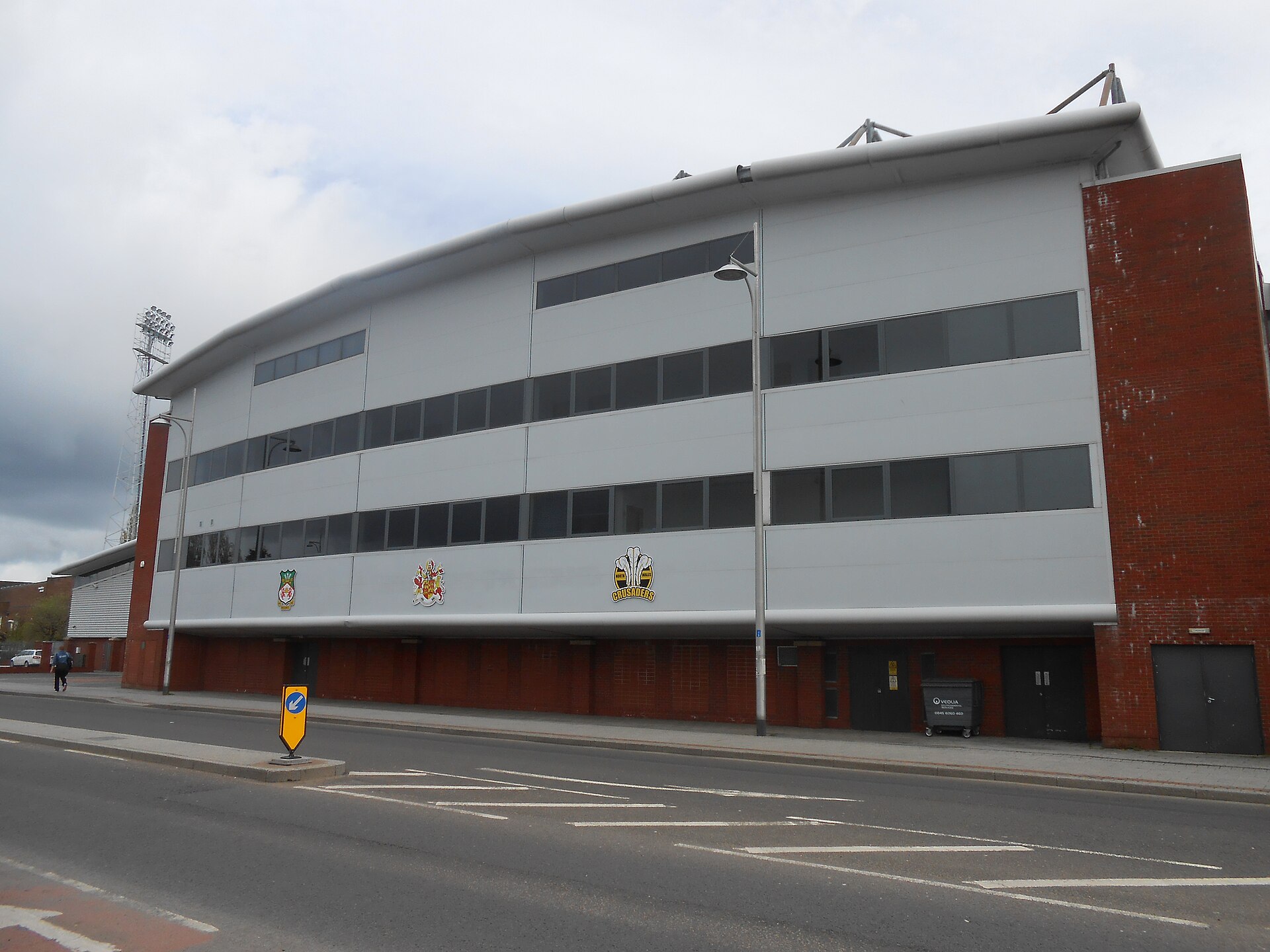
Park Hall, located in Oswestry — technically just inside the Welsh border — is one of the Cymru Premier's most complete facilities. The ground offers English-standard infrastructure that exceeds the minimum requirements for UEFA licensing and domestic competition.
| Facility | Details |
|---|---|
| Stadium capacity | 2,000 (expandable) |
| Pitch surface | Natural grass (main pitch), 3G (training) |
| Floodlighting | UEFA-compliant |
| Dressing rooms | Home, away, and officials — all to UEFA standard |
| Media facilities | Press room, broadcast positions, interview area |
| Training ground | Adjacent 3G pitch with dedicated training complex |
| Parking | 500+ spaces, significant for a semi-rural location |
The facility's location is both an asset and a complication. Oswestry sits on the English side of the border, giving the club access to a larger local population base than most Welsh venues. However, it also means the club's natural catchment is English — a factor that affects identity and community engagement. For a comparison with other league venues, see our Stadium Guide.
European Track Record
European competition is the single most important differentiator in TNS's financial model. The club has qualified for UEFA competition in every season that it has won the Cymru Premier title, and its domestic dominance means that access is near-annual.
| Season | Competition | Round Reached | Estimated Revenue Impact |
|---|---|---|---|
| 2024/25 | UEFA Champions League Qualifiers | First qualifying round | £250K–£350K |
| 2023/24 | UEFA Champions League Qualifiers | Second qualifying round | £350K–£450K |
| 2022/23 | UEFA Conference League Qualifiers | Second qualifying round | £300K–£400K |
| 2021/22 | UEFA Champions League Qualifiers | First qualifying round | £200K–£300K |
The revenue impact of European competition extends beyond prize money. European fixtures generate increased matchday income (higher ticket prices, larger crowds), elevated sponsorship valuations, and media exposure that would otherwise be unattainable for a club of TNS's size.
For a full history of Welsh clubs in European competition, see our European Competition History guide.
Competitive Position
TNS's domestic dominance is unrivalled in modern Welsh football. Fifteen league titles place them well ahead of any contemporary rival, and the gap has widened in recent seasons as the club's financial advantage has compounded.
| Club | Estimated Revenue | Estimated Squad Value | Recent League Titles |
|---|---|---|---|
| The New Saints | £3.2M | £2.5M | 15 |
| Connah's Quay Nomads | £1.8M | £1.5M | 2 |
| Bala Town | £800K | £600K | 1 |
| Haverfordwest County | £1.4M | £700K | 0 |
| Cardiff Met | £1.1M | £400K | 0 |
This dominance creates a self-reinforcing cycle: titles generate European qualification, which generates revenue, which funds squad investment, which generates more titles. Breaking this cycle is the central challenge facing every other Cymru Premier club — and the central opportunity for investors willing to fund a genuine challenger.
For individual club profiles, see our Club Investment Profiles series.
Strengths and Risks
Strengths
- Proven revenue model: Four diversified income streams with European prize money providing significant upside.
- Professional infrastructure: The only full-time squad in the league, with facilities that meet UEFA standards.
- Competitive moat: Fifteen titles and a self-reinforcing cycle of dominance that would require significant rival investment to break.
- Recruitment pipeline: Established relationships with English lower-league clubs and agents.
- Brand recognition: The most internationally recognised Cymru Premier club, aided by European exposure.
Risks
- European dependency: A significant portion of revenue is tied to European qualification. A poor domestic season that breaks the cycle would have outsized financial impact.
- Location ambiguity: Park Hall's position in Oswestry creates identity challenges and limits the Welsh community connection that other clubs leverage.
- Attendance ceiling: Average crowds of 500–800 are low relative to revenue, suggesting limited matchday growth potential without relocation or significant community investment.
- Concentration risk: The club's success is built on a model that depends on continued domestic dominance — any structural change to the league (such as the 2027 expansion to 16 teams) could dilute the competitive advantage.
- Wage inflation: As the league professionalises and rival investment increases, TNS's wage bill may need to rise simply to maintain its current competitive position.
Investment Thesis
TNS is the Cymru Premier's blue-chip asset. The investment case rests on three propositions:
- Stability: Fifteen titles and consistent European qualification provide a predictable revenue floor that no other Welsh club can match.
- European upside: UEFA's expanding prize money pools mean that the financial return from European competition is growing year on year, even for clubs eliminated in early qualifying rounds.
- Platform value: TNS's brand, infrastructure, and competitive record provide a platform for commercial expansion — particularly in areas like digital media, international fan engagement, and merchandise — that has not yet been fully exploited.
The counterargument is that TNS's valuation already reflects these advantages, making it the most expensive acquisition in the league. Investors seeking undervalued opportunities may find better risk-adjusted returns elsewhere — see our Undervalued Clubs analysis. But for those prioritising certainty over upside, TNS remains the strongest proposition in Welsh football.
Before making any investment decision, prospective buyers should review the club's Companies House filings and work through our Due Diligence Guide.
Source and Methodology
Data in this profile is drawn from Companies House filings (2023–2025), Transfermarkt squad valuations (March 2026), FAW Annual Reports (2024/25), UEFA prize money distributions (published), and Cymru Connect's proprietary analysis of club financial statements. Attendance figures are sourced from the FAW's official match reports. Revenue estimates are approximations based on publicly available data and should not be treated as audited figures. All figures are denominated in GBP.