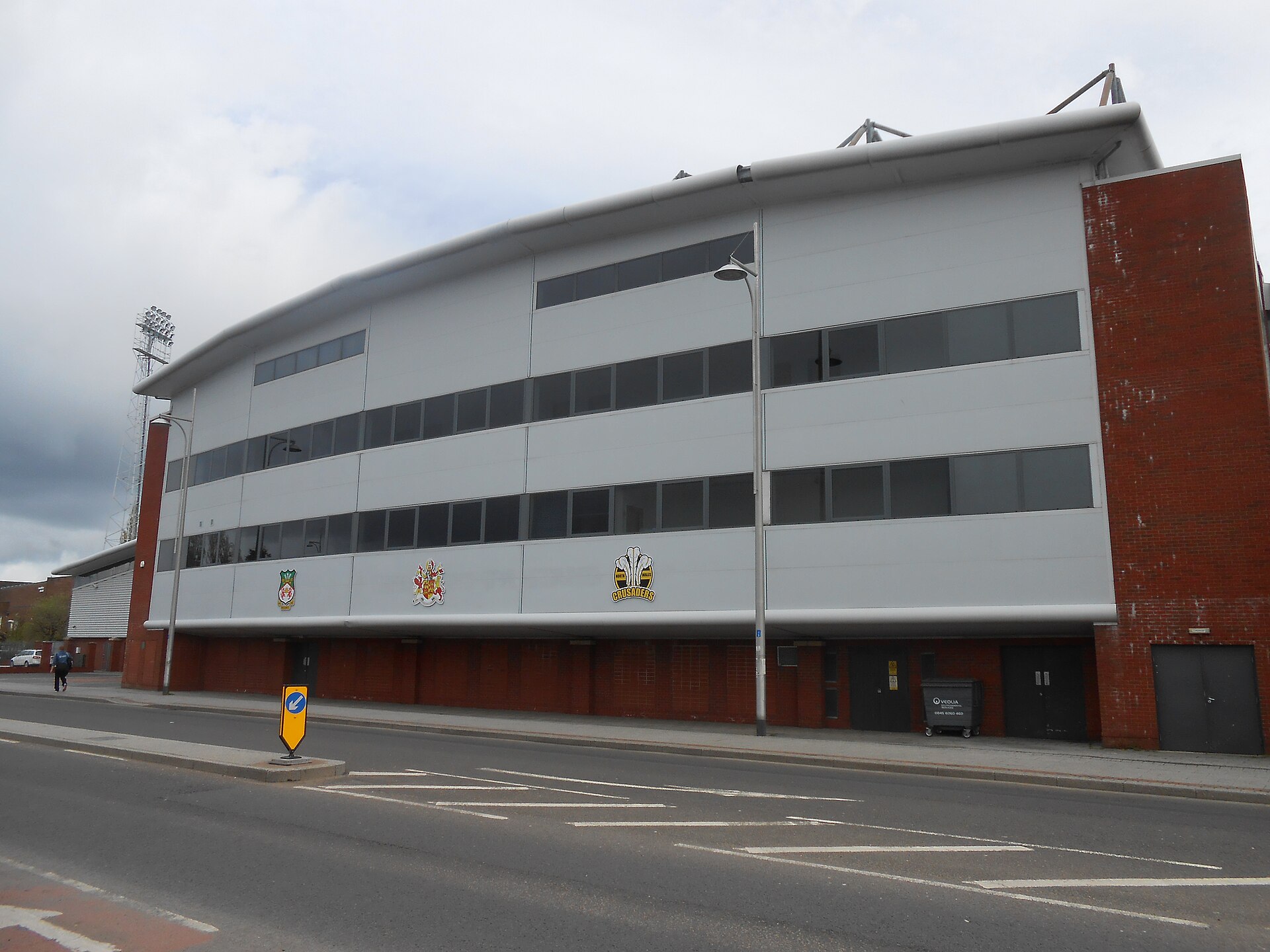

TL;DR: Cardiff Met's student-athlete model delivers 45% of squad minutes from academy graduates on a £450K squad value — the most cost-effective development programme in the Cymru Premier. With £700K in estimated revenue, a UEFA licence, and university-subsidised infrastructure, the club demonstrates that top-flight Welsh football is achievable without transfer spending. For investors, the model offers a blueprint for sustainable club operations and a pipeline of players with residual transfer value.
A Unique Proposition in European Football
Cardiff Metropolitan University FC occupies a position unlike any other club in the Cymru Premier — and, arguably, in European football at this level. As a university-owned football club competing in the top division of a UEFA member association, Cardiff Met blends the financial stability of an educational institution with the competitive demands of professional-level football. The result is a club that produces more academy minutes per pound spent than any rival in the league.
The model works because the incentive structures align. The university benefits from sporting prestige, student recruitment appeal, and sports science research opportunities. The football club benefits from subsidised facilities, coaching resources, and a continuous pipeline of talented student-athletes who cost nothing in transfer fees and accept wages well below market rate. For investors, understanding this model matters even if they are not considering Cardiff Met specifically — because it establishes the cost floor against which every other Cymru Premier club's spending should be benchmarked.
For comparative investment context, see the Club Investment Profiles and the Best Academy Clubs guide.
The Student-Athlete Model Explained
How It Works
Cardiff Met's football programme is integrated into the university's Sport and Health Sciences faculty. Players are simultaneously degree students and first-team footballers, with their academic and athletic commitments structured to coexist:
| Element | Detail |
|---|---|
| Academic commitment | Full-time degree (typically 3-4 years) |
| Training schedule | Integrated with university sports programme |
| Facilities | University sports campus (shared) |
| Coaching staff | Mix of university and FAW-qualified coaches |
| Sports science support | University department (subsidised) |
| Player contract type | Student-athlete (reduced wages) |
| Typical player tenure | 3-4 years (degree duration) |
| Post-graduation pathway | Professional contract, coaching, or non-football career |
This structure means that Cardiff Met's annual recruitment is partially automated: each September, new students arrive with football ambitions, and the best are integrated into the first-team squad. There is no transfer market dependency, no agent fees, and no signing-on bonuses. The club's recruitment cost is effectively zero.
The Numbers
| Metric | Value | Source | League Context |
|---|---|---|---|
| Academy Players in Squad | 12 | Cymru Premier Academy Overview | Highest in league |
| Academy Minutes (% of total) | 45% | Cymru Premier Academy Overview | Highest in league |
| Estimated Squad Value | £450K | Transfermarkt, March 2026 | Bottom quartile |
| Revenue Estimate | £700K | Cymru Connect analysis | Mid-table |
| UEFA Licensing Status | Met | FAW licensing committee | 8 of 12 clubs meet criteria |
| Transfer Spending (annual) | ~£0 | Club records | Lowest in league |
The headline figure — 45% of first-team minutes going to academy graduates — demands context. In the Cymru Premier, the average academy minutes share is approximately 15-20%. Cardiff Met delivers more than double that rate, proving that the development pathway is not decorative — it is central to the first-team operation.
For league-wide academy comparisons, see the Academy Clubs analysis and the Scouting Report.
Financial Model
Revenue Sources
Cardiff Met's £700K revenue is structured differently from conventional Cymru Premier clubs:
| Revenue Stream | Est. Annual Value | % of Total | Notes |
|---|---|---|---|
| University subsidy/support | £200-300K | 30-40% | Facilities, coaching, administration |
| Broadcast (FAW/S4C) | £80-120K | 12-17% | Standard league distribution |
| FAW/Sport Wales grants | £50-80K | 7-12% | Development and participation grants |
| Matchday | £30-50K | 4-7% | Lower attendance than league average |
| Commercial/Sponsorship | £50-80K | 7-12% | Limited but growing |
| Other (player sales, events) | £50-100K | 7-14% | Occasional transfer income |
The university subsidy is the defining feature. By providing facilities, sports science support, and a portion of coaching staff costs through the university's general operations, Cardiff Met effectively receives £200-300K in annual support that does not appear as traditional football revenue. This is not charity — the university gains legitimate educational and reputational benefits — but it does mean that Cardiff Met's cost base is fundamentally different from clubs that must fund all operations from football-specific income.
Cost Advantages
| Cost Category | Cardiff Met (est.) | Cymru Premier Average | Saving |
|---|---|---|---|
| Player wages (annual) | £60-100K | £250-400K | 60-75% |
| Facilities | £0 (university) | £40-60K | 100% |
| Sports science | £0 (university) | £10-20K | 100% |
| Transfer fees | £0 | £10-50K | 100% |
| Coaching staff | £30-50K (partial) | £60-100K | 50% |
| Total savings | £200-350K |
These savings are the model's competitive edge. Cardiff Met maintains top-flight status — including UEFA licensing compliance — on a cost base that would be impossible for a standalone club with similar revenue. The question for investors and rival clubs is whether this model is replicable.
Player Development Pipeline
From Student to Professional
Cardiff Met's academy produces players who face a structured development pathway:
Year 1-2: Integration into first-team training, competitive minutes in cup matches and league rotation. Academic modules in sports science, coaching, or related fields run in parallel.
Year 3-4: Established squad members who have accumulated 50-100+ first-team appearances. The strongest players attract attention from higher-level clubs (English Championship, League One, Cymru Premier rivals with larger budgets).
Post-graduation: Players either sign professional contracts (at Cardiff Met or elsewhere), move into coaching or sports management roles, or pursue non-football careers with a degree in hand. The dual pathway is the model's defining benefit for players.
Transfer Value Generation
While Cardiff Met does not operate as a selling club in the traditional sense, the development pathway creates transfer value. Players who arrive as unpaid students and leave as semi-professional footballers with 100+ top-flight appearances carry market value — typically in the £10-50K range for the Cymru Premier, but potentially higher for players who attract English league interest.
| Player Pathway | Est. Transfer Value | Frequency |
|---|---|---|
| To Cymru Premier rival | £10-30K | 2-4 per year |
| To English lower leagues (L1/L2) | £30-100K | 0-1 per year |
| To English non-league | £5-15K | 1-2 per year |
| International recognition (Wales U21+) | Value enhancement | Occasional |
For the broader Welsh talent market, see the Welsh Players Signed by English Clubs data and the Talent Pipeline analysis.
Competitive Analysis
On-Pitch Performance
Cardiff Met's competitive record in the Cymru Premier demonstrates that the student-athlete model is viable at the top level, though it comes with inherent limitations:
| Competitive Metric | Cardiff Met | League Context |
|---|---|---|
| Typical league position | 6th-10th | Mid-to-lower table |
| European qualification | Occasional (via cup) | Not regular |
| Welsh Cup performance | Semi-final stage (best) | Competitive |
| Squad turnover rate | 25-35% per year | Highest in league |
| Season-to-season consistency | Variable | Reflects graduation cycles |
The 25-35% annual squad turnover is the model's primary competitive limitation. Each summer, graduating players leave and are replaced by incoming students who need integration time. This creates a predictable performance cycle: teams tend to be stronger in the second half of the season as new players settle, and weakest at the start of each campaign.
Where the Model Sits in the League
| Tier | Clubs | Characteristic |
|---|---|---|
| 1 | TNS (£2.5M squad) | Dominant, professional |
| 2 | Connah's Quay, Barry, Newtown | Semi-professional, competitive |
| 3 | Caernarfon, Penybont, Haverfordwest | Community-driven, growing |
| 4 | Cardiff Met, Bala | Model-dependent, sustainable |
Cardiff Met's position in Tier 4 is not a reflection of failure — it is a logical outcome of a model that prioritises development over results. The club's objective is not to win the league; it is to provide a development environment that serves both football and academic goals. Investors in other clubs should understand this when benchmarking squad costs against Cardiff Met's figures.
Replicability: Can Other Clubs Adopt This Model?
The Cardiff Met model is frequently cited as a template for sustainable football. But its replicability is limited by several structural factors:
What Is Replicable
- Academy-first philosophy: Any club can prioritise youth development and allocate more minutes to academy products. The Youth Pathway analysis shows the benefits.
- Education partnerships: Clubs can partner with local universities or further education colleges to access facilities, sports science, and coaching resources without owning them.
- Cost discipline: Cardiff Met's wage structure proves that Cymru Premier football does not require £300K+ wage bills. Clubs can compete at the lower end of the table with significantly smaller budgets.
What Is Not Replicable
- Institutional ownership: The university provides a financial backstop and operational infrastructure that a standalone club cannot replicate. The risk profile is fundamentally different.
- Player recruitment model: The annual intake of student-athletes is a unique feature of university football. Standalone clubs must recruit through traditional (and more expensive) channels.
- Facility subsidy: Access to university-grade sports facilities at zero marginal cost is not available to clubs without institutional partnerships.
Hybrid Models
Several Cymru Premier clubs are exploring hybrid approaches that adopt elements of the Cardiff Met model:
- Haverfordwest County: £3.5M academy planned, combining community and educational elements
- Multiple clubs: FAW-funded coaching development programmes that subsidise some coaching costs
- Regional partnerships: Clubs partnering with local FE colleges for player education pathways
For infrastructure investment approaches, see the Community Sports Hub funding guide.
Investment Implications
For Investors Considering Cardiff Met
Cardiff Met is unlikely to change ownership in the conventional sense — it is a university asset, not a standalone football club for sale. However, the model has investment relevance:
- Sponsorship opportunities: The university-football nexus creates unique sponsorship propositions (education brands, sports equipment, health and wellness companies)
- Partnership models: External investors could partner with the university to fund specific initiatives (academy enhancement, European campaign support, facility upgrades)
- Research collaboration: The sports science department offers research and development capabilities relevant to football performance and sports technology
For Investors Considering Other Clubs
Cardiff Met's model establishes the cost floor for Cymru Premier competition. Any investor evaluating another club should ask:
- Why does this club's wage bill exceed Cardiff Met's by £X? Is the premium justified by competitive results or commercial revenue that Cardiff Met does not generate?
- What academy integration rate is the club achieving? If it is below Cardiff Met's 45%, there is room to reduce costs through better development pathways.
- Can the club partner with educational institutions? Even modest partnerships can offset facility and coaching costs.
For return analysis, see the Investment Returns projections. For squad cost benchmarks, see Squad Values and Wages.
The Development Track Record
Cardiff Met's production line has generated players who have progressed through the Welsh football system and beyond:
| Development Metric | Estimated Value |
|---|---|
| Players progressed to higher leagues | 5-8 per decade |
| Wales age-group internationals produced | 3-5 active |
| Coaching qualifications earned by players | 8-12 annually |
| Graduates in football-related careers | 15-20 per year |
The non-football outcomes are as significant as the football ones. Cardiff Met produces graduates who become coaches, analysts, sports scientists, and administrators — feeding the wider Welsh football ecosystem with qualified professionals. This broader impact is part of the model's value and a key reason the FAW supports the club's participation in the top flight.
Conclusion
The Cardiff Met model is not for every investor or every club. It trades competitive ceiling for financial floor — accepting mid-table finishes in exchange for a cost base that makes financial failure virtually impossible. For the Cymru Premier as a whole, it serves as both a development engine and a cost benchmark.
For investors, the lessons are clear: top-flight Welsh football does not require large budgets. Academy integration, institutional partnerships, and cost discipline can sustain a competitive club on £450K. The clubs that spend more need to demonstrate that the additional expenditure generates proportionally higher revenue or competitive outcomes. Many do not.
For further reading, see the Club Valuations, the Revenue Breakdown, and the Benchmarking Guide.
Source & Methodology
Data in this analysis is drawn from the Cymru Premier Academy Overview (2026), Transfermarkt player valuations (March 2026), FAW licensing committee reports, Cardiff Metropolitan University public reports, and Cymru Connect's proprietary revenue and development modelling. Academy minutes percentages are calculated from available match data across the 2025/26 season. Revenue estimates are informed by Companies House filings where available and industry benchmarks for university-affiliated sports programmes. All figures should be treated as informed estimates.