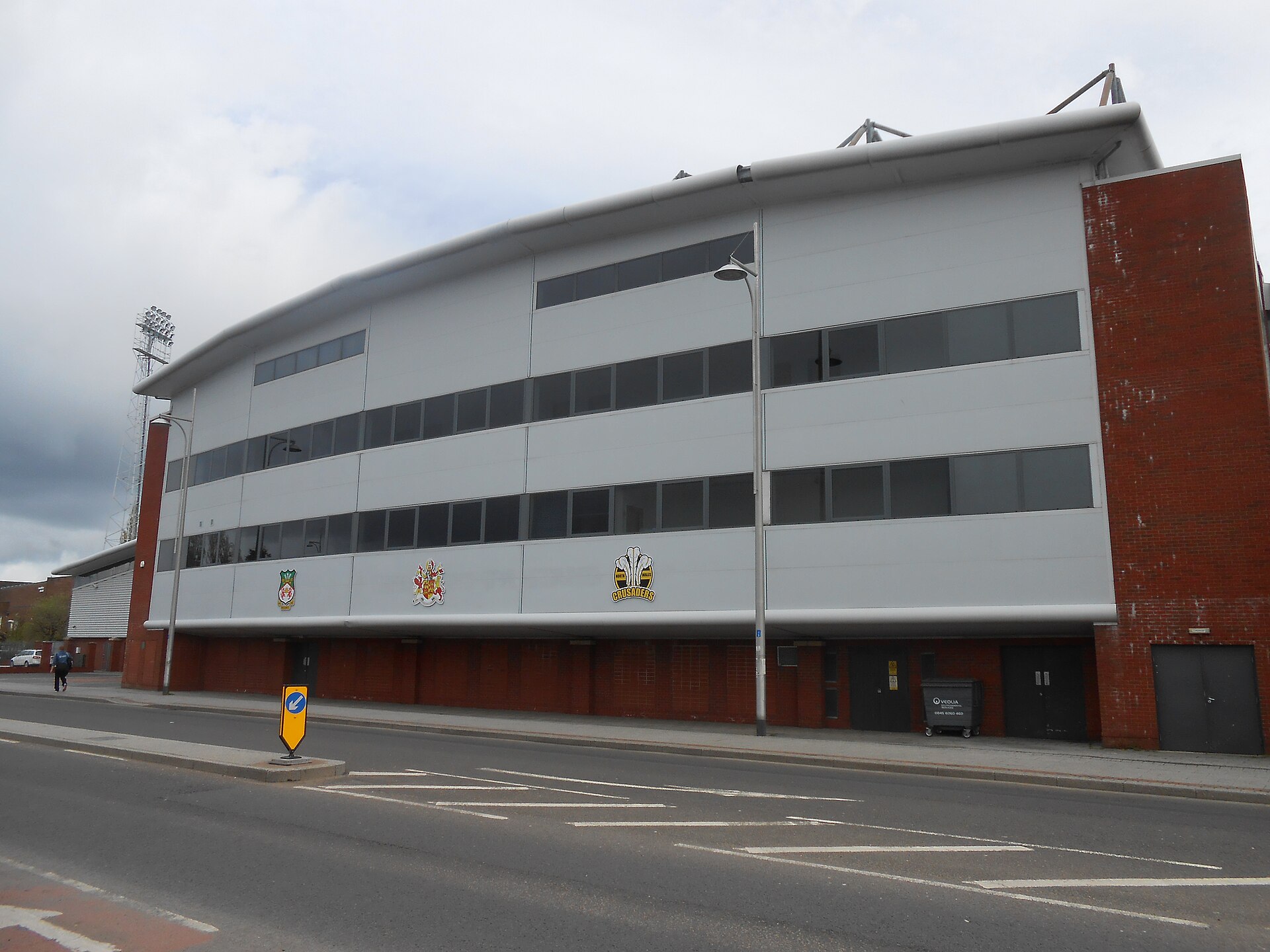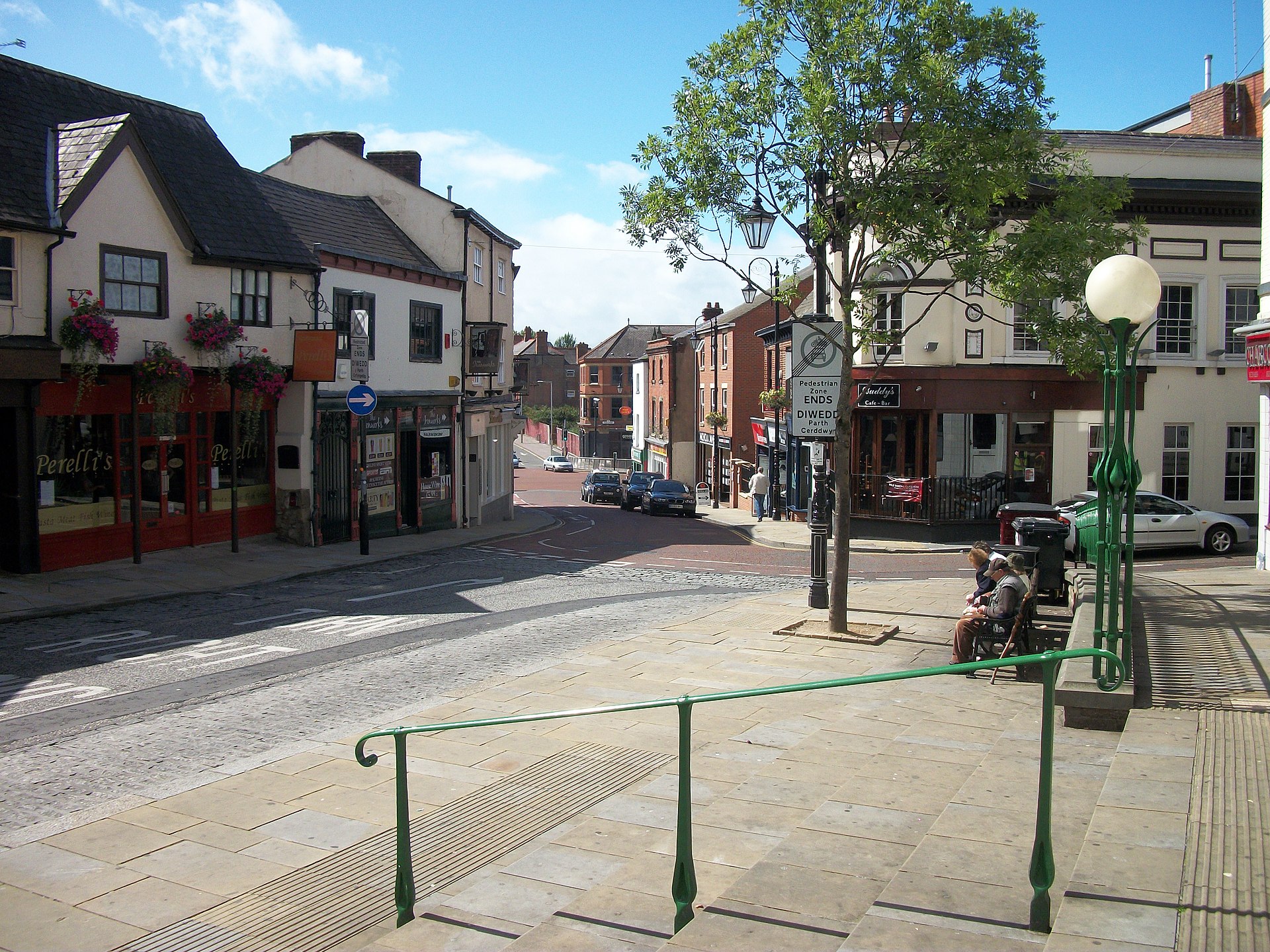
TL;DR: Welcome to Wrexham was not supposed to be a business case study. It was supposed to be a fish-out-of-water story about two Hollywood actors buying a struggling football club. What it became was the most consequential piece of sports media produced in the 2020s — rewriting the commercial playbook for small-club ownership, establishing the documentary as a genuine business asset, and creating a template that investors across the football pyramid are now actively trying to replicate. The numbers are stark: Wrexham's shirt sponsorship value increased by an estimated 900% between 2020 and 2024, global brands that had never touched non-league football signed kit and partnership deals, and Welsh football — a league most sports investors could not have located on a map — became a reference point in boardrooms from Los Angeles to Dubai.
Nobody planned for a documentary to transform Welsh football. The cameras were supposed to document an acquisition. What they actually captured was a love story between two Hollywood stars and a struggling town — and it changed the economics of small-club ownership forever. Five years on from Ryan Reynolds and Rob McElhenney completing their takeover of Wrexham AFC, the ripple effects have spread across every tier of the Welsh football pyramid. Understanding how that happened, and what it means for investors and clubs who want to replicate even a fraction of it, is now essential knowledge for anyone serious about football as a commercial proposition.
Before the Cameras Rolled: Why This Was Different
The standard model for buying a football club at non-league level has always been the same: acquire quietly, build steadily, and hope that results on the pitch eventually generate the revenue to sustain the project. Ambition was largely internal. Marketing was minimal. The idea that an investor might treat the story of the acquisition itself as a primary commercial asset simply did not exist as a concept.
Reynolds and McElhenney approached it entirely differently. Before a single ball was kicked under their ownership, they had agreed the terms of a documentary series. The cameras were commissioned not after the club had done something worth filming, but from the very first day — capturing the due diligence, the community meetings, the awkward first attempts to understand a sport and a town that neither man knew well. The story was the product, alongside the club itself. Both were being built simultaneously.
This was unprecedented for a club at Wrexham's level. Football documentaries had existed for decades, but they were almost always made about clubs that had already achieved something: a Premier League title, a dramatic relegation battle, a storied cup run. The idea that a club still playing in the fifth tier of English football — with a budget dwarfed by League One sides — would be the subject of a prestige documentary deal with a major broadcaster was, at the time, genuinely difficult to take seriously.
Why did FX and Hulu say yes? Almost certainly not because of football. The sport was almost incidental to the pitch. What the broadcasters were buying was the characters: Reynolds and McElhenney are both experienced producers who understood television narrative, and they pitched themselves — their confusion, their passion, their public personas — as the story. The football club was the setting. The sport was the texture. The human drama was the product.
That distinction matters enormously for what came next.
The Making of Welcome to Wrexham

Welcome to Wrexham was produced by RCR Media Group, the production company co-founded by Reynolds and McElhenney specifically to develop the documentary. This detail is significant: the club's owners were also the producers. There was no external production company with different commercial interests, no network that owned the intellectual property independently. The documentary was vertically integrated with the club's ownership structure from the beginning — meaning that its commercial success benefited the same entity that owned the football club.
The FX/Disney+ distribution deal gave the series immediate global reach. From its first episode, Welcome to Wrexham was available in over 100 countries simultaneously. This was not how football documentaries typically worked — most had been sold territory by territory, often years after production. The global-from-day-one distribution model meant that the commercial effects — sponsorship enquiries, merchandise interest, tourism — arrived at scale and arrived quickly.
Three seasons had aired by early 2026, following the club's journey from the National League through consecutive promotions. The show's scope expanded with the club's ambitions, but its emotional core remained consistent: community first, football second. The Racecourse Ground is a character in its own right. The town of Wrexham — its pubs, its factories, its history, its people — receives more screen time than most players. Fans who became regulars on the show, including supporters who had been attending since the 1970s, became as recognisable to international audiences as any footballer.
The cinematography reflected this approach. Welcome to Wrexham does not look like a sports programme. It looks like a prestige drama, with production values that signal to a viewer that what they are watching is worth their time even if they have no interest in football. The decision to invest in high-end production from the beginning — rather than treating documentary coverage as a marketing afterthought — is one of the most instructive lessons for clubs and investors considering their own storytelling strategies.
The Numbers Behind the Show

The commercial performance of Welcome to Wrexham was substantial by any measure. Season 1 alone drew 5.7 million viewers in the United States, a figure that placed it among the most-watched sports documentaries in American television history. International viewing data, though less precisely reported, was consistent with a global audience reaching tens of millions across the Disney+ and FX distribution networks.
The series collected multiple Emmy Award nominations and wins, legitimising sports documentaries as prestige television at exactly the moment when streaming platforms were investing heavily in non-fiction content. This matters commercially because Emmy recognition changes the category of product you are making: a club associated with award-winning television is not the same proposition to a sponsor as a club associated with a camera crew following the coach around.
The social media effect was immediate and dramatic. Wrexham AFC's Twitter following grew from approximately 50,000 to over 1 million during the first season — a 1,900% increase in a matter of months, driven almost entirely by viewers who had discovered the club through the documentary. This transformed the club's digital assets overnight. A sponsor buying shirt space was no longer buying exposure to 5,000 people in a stadium on match days. They were buying access to an international online audience that was actively engaged with the club's story.
YouTube highlights and clips from the documentary reached audiences who would never have sought out non-league football content independently. The algorithm served the documentary clips to fans of Reynolds and McElhenney, fans of prestige television, and fans of human-interest storytelling. Welsh football arrived in living rooms and on screens across the world via routes that had nothing to do with football distribution channels.
Merchandise told a similar story. Wrexham kit sales moved from a small, locally-focused operation to an international shipping business. Replica shirts were photographed in New York, Tokyo, and Sydney by supporters who had never seen a match in person and had no immediate prospect of doing so.
What the Documentary Did to Club Revenue
The commercial transformation of Wrexham AFC's revenue profile between 2020 and 2026 is the clearest evidence that the documentary model works. Shirt sponsorship values increased by an estimated 900% over the period, with global brands competing for visibility on a club jersey that was now being photographed and shared across international media.
The kit partnership story is particularly instructive. Before the acquisition, Wrexham's commercial relationships were modest and regional. After the documentary's success, TikTok, Expedia, and Aviation Gin — Ryan Reynolds's own spirits brand — were among the commercial partners visible on or around the club. These are not brands that evaluate non-league football clubs on traditional metrics: attendance figures, league position, local catchment area. They evaluated the documentary audience, the social media following, and the emotional engagement of a global fanbase. By those metrics, Wrexham was competitive with clubs playing several divisions higher.
Matchday hospitality — historically the most constrained revenue stream for non-league clubs, because it is limited by stadium capacity and local economic geography — became a premium product. Hospitality packages at the Racecourse Ground sold out in advance. Prices that would have been unsustainable before the documentary, because the local market could not support them, became achievable because the club was drawing visitors from outside the region specifically to experience Wrexham as a destination.
The virtuous cycle that emerged is the most important structural insight for investors. The documentary generates audience. The audience generates sponsor interest. The sponsor investment funds better facilities, better players, and better production of the documentary content itself. Better content generates more audience. The cycle compounds. What makes Wrexham's model difficult to replicate is not any single element of it — it is the self-reinforcing nature of the loop, which requires all elements to be operating simultaneously.
The Genre It Created
Before Welcome to Wrexham, football documentaries were almost always commissioned by clubs or broadcasters as promotional content — the club controlled the narrative, difficult topics were avoided, and the audience was understood to be existing fans seeking additional access. The genre was marketing material with a more expensive production budget.
After Welcome to Wrexham, a different model became viable. Sunderland 'Til I Die had pointed in this direction — an independently produced, unflinching account of a club in crisis — but it reached a limited audience. The Reynolds and McElhenney production demonstrated that a football documentary could achieve mainstream prestige television status when the storytelling prioritised human drama over sporting results.
The consequences for football investment are significant. Clubs began to understand that their stories — not just their performances — were commercial assets. Bradford City commissioned documentary coverage. AFC Wimbledon allowed cameras access during a particularly turbulent period. The underlying logic had shifted: transparency was no longer a risk to be managed but a potential asset to be monetised.
For investors evaluating clubs, documentaries have also emerged as a form of due diligence in reverse. A club that allows genuine documentary access, and whose footage reveals a healthy culture, engaged community, and credible management, is providing potential partners and sponsors with a level of insight that no prospectus can match. The documentary as a trust-building instrument — showing investors and sponsors what a club actually is, not what it claims to be — is a relatively unexplored opportunity for clubs across the Welsh pyramid. You can read more about the full Wrexham ownership model and how it has been studied by prospective buyers across Europe.
What Other Clubs and Investors Can Learn
The most common response to the Wrexham story from clubs operating at lower levels is a version of: "That's all very well, but we don't have Hollywood stars." This is understandable, and partly correct — the Reynolds and McElhenney factor is not replicable. But it misses the more transferable lessons.
The documentary worked because the story was genuinely compelling. The Hollywood names opened doors and guaranteed an initial audience. But audiences do not watch three seasons of a television programme because of celebrity. They watch because the story earns their attention — because the characters are real, the stakes are meaningful, and the outcome is uncertain. Those elements exist at almost every football club operating below the top flight.
Every Welsh football club operating in the Cymru Premier, the Adran leagues, or the Welsh Futsal league has stories that have never been told to an audience beyond the immediate community. History stretching back a century or more. Characters — players, managers, supporters, volunteers — whose lives intersect with football in ways that are both particular to their experience and universally recognisable. Drama that unfolds every season regardless of what the camera crews do.
Investors who understand the value of content approach clubs differently as a result. Rather than evaluating a club purely on its balance sheet, its ground infrastructure, or its current league position, content-aware investors ask: what is the story here, and who wants to hear it? The answer to that question can transform a club's commercial ceiling. The celebrity football club ownership model — and the media-first investment strategies it has inspired — is now a distinct and growing subcategory of football investment that Welsh clubs are well positioned to attract.
Practical steps do not require a Disney+ deal to be meaningful. Local and regional broadcasters — including S4C, which has a structural interest in Welsh football content — represent genuine commissioning opportunities for clubs with compelling stories. YouTube content, produced consistently and with reasonable production values, builds audiences that eventually have commercial value. Social media handled as a storytelling platform rather than a results ticker creates the kind of engaged following that sponsors pay for. The media rights asset class is emerging in lower-league football, and clubs that invest in content infrastructure now will be better placed to monetise it as the category matures.
The Wales Angle: What It Means for the Cymru Premier
Wrexham's story has placed Welsh football on a global map in a way that nothing else in the league's history has managed. This is not hyperbole. Before 2020, the Cymru Premier was functionally invisible to international football audiences. After Welcome to Wrexham, international journalists cover the league with a regularity and seriousness that would have been unimaginable a decade ago.
S4C Sgorio, the Welsh-language football programme that has broadcast Cymru Premier coverage for decades, has reported meaningful increases in both linear viewing and digital engagement in the post-Wrexham period. An audience that discovered Welsh football through the documentary has, in some cases, followed that interest to the league itself — watching Sgorio coverage of TNS, Connah's Quay, Barry Town, and Penybont as an extension of their engagement with the Wrexham story.
International sports journalists who would previously have written about Welsh football only when the national team was involved have filed features on the Cymru Premier as a league worth examining in its own right. Coverage of TNS's European qualification campaigns, Connah's Quay's continental ambitions, and the league's structural expansion to 16 clubs has appeared in outlets that have no particular reason to cover Welsh domestic football except that their readers are now interested.
For clubs that are not Wrexham — which is all of them — this halo effect represents a genuine and ongoing commercial opportunity. The awareness infrastructure that the documentary built does not disappear between episodes. Every month that Welcome to Wrexham continues to attract new viewers on Disney+ is another month in which potential sponsors, investors, and supporters are discovering Welsh football for the first time and asking what else is there to see.
The honest answer is: a great deal. The Cymru Premier is a competitive, well-organised league with clubs that have genuine stories, genuine communities, and genuine commercial potential. The challenge has never been the quality of the football or the depth of the culture. The challenge has been getting the right audience to look. For the first time in the league's history, a significant portion of the world's football-watching population is already looking. What happens next depends on whether Welsh clubs — and the investors who back them — understand that the story is now theirs to tell.
For a comprehensive account of how the Wrexham acquisition reshaped football investment thinking, read The Wrexham Effect: The Full Story. For a detailed breakdown of how the celebrity ownership model has been studied and adapted by investors across Europe, see Celebrity Football Club Ownership Explained.