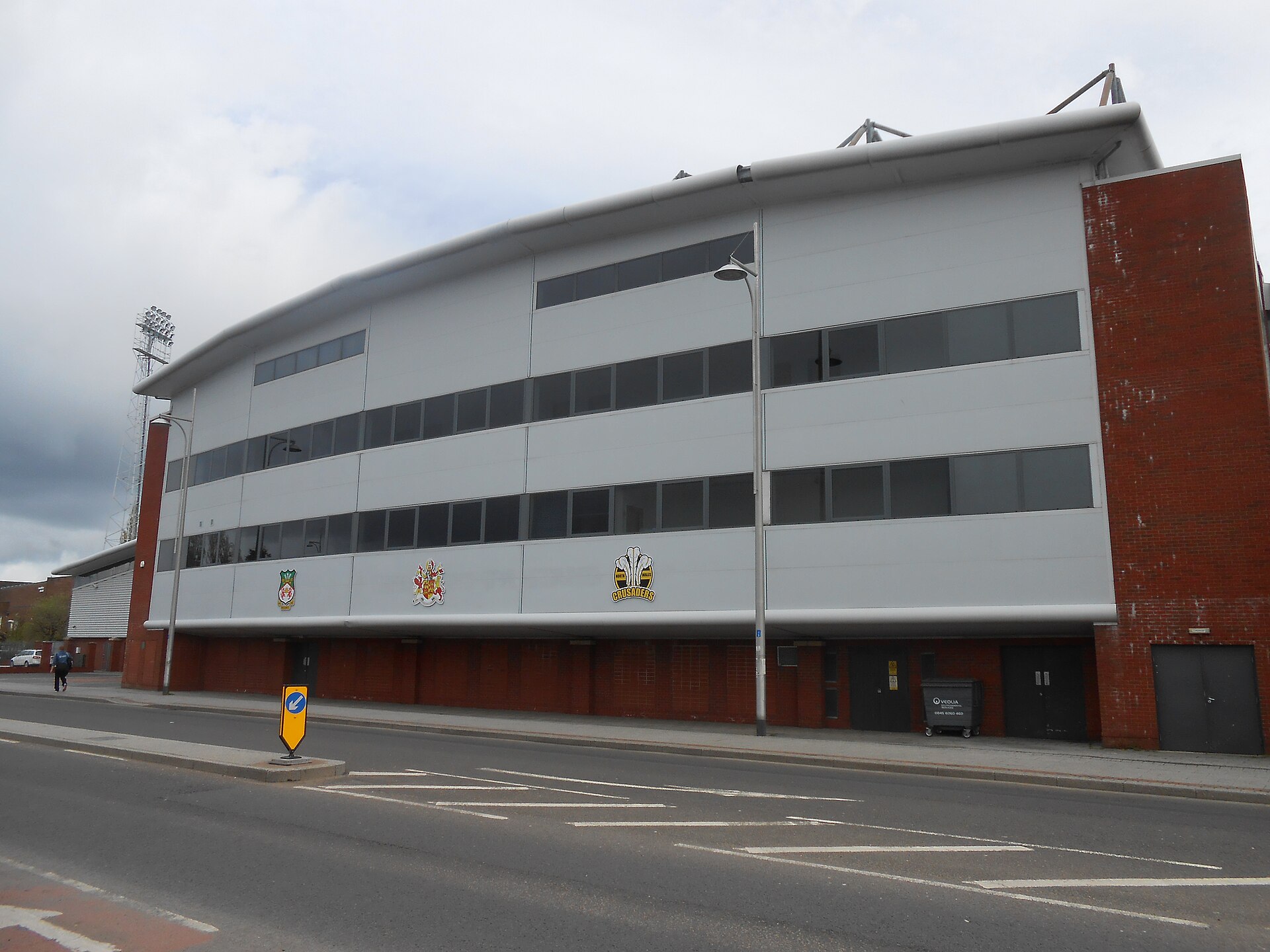

TL;DR: TNS lead the Cymru Premier at £2.5M squad value with the league's only fully professional wage bill; Llanelli sit at approximately £150K. The 16:1 ratio between top and bottom reveals both the financial stratification of Welsh football and the investment opportunity — clubs in the £500K-£1M squad value band offer the strongest growth potential relative to capital required.
The Financial Anatomy of a Welsh Football Squad
The Cymru Premier operates within a financial framework that bears little resemblance to the English pyramid. Total league-wide squad value is estimated at approximately £8.5M — less than a single Championship player's transfer fee. Yet within this modest envelope, the financial dynamics are surprisingly complex. The gap between the league's richest and poorest clubs drives competitive imbalance, shapes transfer strategies, and creates distinct investment profiles for each tier of the division.
Understanding squad values and wage structures is essential for investors because these metrics determine a club's competitive ceiling, financial sustainability, and asset base. A club's squad is typically its most valuable transferable asset — more liquid than property, more appreciable than commercial contracts, and more directly correlated with sporting performance than any other balance sheet item.
League-Wide Squad Valuations
| Club | Squad Value | Revenue | Wage Bill (est.) | Wage-to-Turnover | Model |
|---|---|---|---|---|---|
| TNS | £2.5M | £3.2M | £1.6M (est.) | ~50% | Full-time professional |
| Connah's Quay | £1.5M | £1.8M | £750K (est.) | ~42% | Hybrid |
| Penybont | £800K (est.) | £1.4M | £500K (est.) | ~36% | Semi-professional |
| Haverfordwest | £700K (est.) | £1.4M | £480K (est.) | ~34% | Semi-professional |
| Cardiff Met | £600K (est.) | £1.1M | £400K (est.) | ~36% | University-integrated |
| Caernarfon | £500K (est.) | £800K | £350K (est.) | ~44% | Semi-professional |
| Barry Town | £450K (est.) | £750K | £320K (est.) | ~43% | Semi-professional |
| Bala Town | £400K (est.) | £700K | £280K (est.) | ~40% | Semi-professional |
| Lower-tier clubs | £150-350K | £300-600K | £120-250K | 35-45% | Semi-professional |
The wage-to-turnover ratio is a critical indicator of financial health and strategic intent. Cardiff Met's 36% and Penybont's 36% suggest financially disciplined operations with significant headroom for wage expansion. Caernarfon's 44% and Barry Town's 43% indicate clubs that are spending aggressively relative to their revenue base — a strategy that can produce on-pitch results but carries financial risk if revenue does not grow to match.
Revenue Composition: Where the Money Comes From
To understand wage dynamics, investors must first understand the revenue streams that fund them.
| Revenue Stream | Range per Club | % of Total Revenue | Stability |
|---|---|---|---|
| Broadcast (S4C/Sgorio) | £80-120K | 15-25% | High (contracted) |
| Matchday Income | £30-60K | 8-15% | Moderate (weather, form) |
| Sponsorship & Commercial | £50-200K | 15-35% | Moderate |
| European Prize Money | £0-200K | 0-20% (qualifying clubs) | Low (performance-dependent) |
| Owner/Benefactor Investment | £100K-1.5M | 20-50% | Variable |
| Community/Grants | £20-80K | 5-15% | Moderate |
The most notable feature of Cymru Premier revenue composition is the high proportion of owner investment. For many clubs, benefactor funding accounts for 30-50% of total income — a model that creates short-term competitive capacity but long-term sustainability risk. Investors acquiring these clubs should assess the extent to which revenue can be transitioned from owner subsidy to self-generating commercial income. Our Revenue Breakdown report analyses this composition club-by-club.
Wage Structures: Professional vs Semi-Professional
The Cymru Premier encompasses three distinct operational models, each with different wage dynamics.
Full-Time Professional (TNS)
TNS is the only club operating a fully professional model. Players train daily, receive annual salaries comparable to English National League clubs (£30,000-£80,000 per year for first-team players), and are contracted on multi-year deals.
| TNS Wage Metrics | Value |
|---|---|
| Estimated Annual Wage Bill | £1.6M |
| Average Player Salary | £50-60K |
| Highest-Paid Player (est.) | £80K+ |
| Contract Length (typical) | 2-3 years |
| Wage-to-Turnover Ratio | ~50% |
The full-time model delivers clear sporting advantages — better-prepared players, more tactical sophistication, and the ability to attract higher-quality signings — but it requires revenue significantly above the league average to sustain.
Semi-Professional (Most Clubs)
The majority of Cymru Premier clubs operate semi-professional models where players combine football with other employment. Training typically occurs 2-3 evenings per week, with matches at weekends.
| Semi-Professional Wage Metrics | Typical Range |
|---|---|
| Estimated Annual Wage Bill | £250-500K |
| Average Player Payment | £150-400/week |
| Contract Type | Rolling annual |
| Training Sessions | 2-3 per week (evenings) |
| Wage-to-Turnover Ratio | 35-45% |
For investors, the semi-professional model offers lower fixed costs and greater financial flexibility, but it imposes a competitive ceiling that limits European qualification prospects and title challenges.
University-Integrated (Cardiff Met)
Cardiff Met's unique model deserves separate analysis. The university subsidises facilities, coaching, and player education, producing a wage-to-turnover ratio of 36% despite fielding a competitive squad. Players receive modest payments but benefit from full-time access to university sports science facilities, nutrition programmes, and academic qualifications.
The model produces the league's highest academy minutes percentage (45%) and demonstrates that competitive Cymru Premier football can be delivered at significantly lower cost than traditional club structures. For a detailed examination, see our Cardiff Met University Club Model analysis.
The Wage-Performance Correlation
Does spending more on wages translate to better results? The data suggests a strong but imperfect correlation.
| Club | Wage Bill Rank | Final League Position (2024/25) | Squad Value Rank |
|---|---|---|---|
| TNS | 1st | 1st | 1st |
| Connah's Quay | 2nd | 2nd | 2nd |
| Penybont | 3rd-4th | 3rd-5th | 3rd |
| Haverfordwest | 3rd-4th | 3rd-5th | 4th |
| Cardiff Met | 5th-6th | 6th-8th | 5th |
| Caernarfon | 5th-6th | 4th-7th | 6th |
At the top and bottom of the league, the correlation holds firmly — the highest spenders finish highest, and the lowest spenders finish lowest. In the middle, however, the relationship loosens. Clubs like Caernarfon consistently overperform their wage bill rank, suggesting that coaching quality, squad cohesion, and community support can compensate for financial disadvantage to a degree.
This "mid-table efficiency gap" represents an opportunity for investors. Clubs that combine modest wage increases with improved coaching, analytics, and recruitment can achieve disproportionate on-pitch improvement without proportionate cost escalation.
Financial Sustainability Analysis
The long-term viability of any football investment depends on whether wage commitments are sustainable relative to self-generating revenue. Clubs reliant on owner subsidies to fund wages face structural risk if ownership changes or benefactor enthusiasm wanes.
| Sustainability Indicator | Healthy | Caution | Concern |
|---|---|---|---|
| Wage-to-Turnover Ratio | <40% | 40-55% | >55% |
| Owner Investment as % of Revenue | <20% | 20-40% | >40% |
| Revenue Diversity (Streams >10% of Total) | 4+ | 2-3 | 1 |
| Cash Reserves (Months of Operating Costs) | 6+ | 3-6 | <3 |
By these metrics, the Cymru Premier's financial health is mixed. Clubs like Penybont, Haverfordwest, and Cardiff Met operate within healthy parameters, while some mid-table and lower clubs show warning signs of over-reliance on single benefactors. The Club Benchmarking report applies these indicators across the full league.
Comparative Context: Where the Cymru Premier Sits
| League | Average Squad Value | Average Wage Bill | Wage-to-Turnover |
|---|---|---|---|
| Cymru Premier | ~£700K | ~£400K | 38-45% |
| League of Ireland (Premier) | ~€2.5M | ~€1.2M | 45-55% |
| Scottish Championship | ~£2M | ~£1.5M | 55-65% |
| Icelandic Premier | ~£1M | ~€600K | 40-50% |
| English National League | ~£2M | ~£1.2M | 55-70% |
The Cymru Premier's wage-to-turnover ratios are generally healthier than comparable leagues, reflecting the prevalence of semi-professional models and the financial discipline imposed by modest revenue bases. However, this also means that clubs have more headroom for wage expansion — an attractive characteristic for investors planning to inject capital and upgrade squad quality.
For a full cross-league comparison, see our Cymru Premier vs League of Ireland analysis and the Cheapest Football Leagues to Invest report.
Investment Strategies by Squad Value Band
£150-400K Band (Rebuilders)
Clubs in this range need foundational investment in recruitment, coaching, and player retention before squad values can appreciate meaningfully. The capital requirement is modest (£100-250K annually) but the timeline to competitiveness is 2-3 seasons. Best suited to patient investors with community engagement strategies.
£500K-£1M Band (Growth Zone)
This is the sweet spot for value creation. Clubs like Caernarfon, Barry Town, and Bala Town have established infrastructure and supporter bases but lack the financial resources to make the jump to consistent title contention. Targeted wage increases of £100-200K annually, combined with improved commercial operations, can produce meaningful squad value appreciation and on-pitch improvement within 1-2 seasons.
£1.5M+ Band (Established)
TNS and Connah's Quay require significant capital to move the needle on squad value, but they offer European revenue, established commercial platforms, and the highest revenue certainty in the league. Investment at this level is about sustaining competitive advantage and maximising European income rather than building from a lower base.
Key Risks
Investors should be aware of several risks specific to squad value and wage investment in the Cymru Premier:
- Player contract structures at semi-professional clubs are typically rolling annual deals, meaning squad value can depreciate quickly if players leave on free transfers
- Limited transfer fee income means that squad value appreciation is not easily monetised through player sales
- Wage inflation driven by increased investment across the league could erode competitive advantages for early movers
- Owner dependency at several clubs creates successor risk if current benefactors withdraw
The Due Diligence Guide covers these risks in the context of club acquisition, while the Companies House Filings analysis provides the financial documentation needed for proper assessment.
Conclusion
Squad values and wage structures in the Cymru Premier reveal a league in transition. The gap between TNS's £2.5M and the league floor of £150K reflects both the opportunity and the challenge — modest capital can generate meaningful competitive improvement, but sustainability requires careful management of wage-to-turnover ratios and diversification of revenue sources. For investors, the £500K-£1M squad value band offers the optimal combination of growth potential, manageable capital requirements, and competitive headroom.
Financial data sourced from Companies House filings, Transfermarkt (March 2026), FAW licensing reports, and Cymru Connect internal modelling. Wage estimates are based on industry benchmarks and publicly available information; individual club figures may vary. Data as of March 2026.