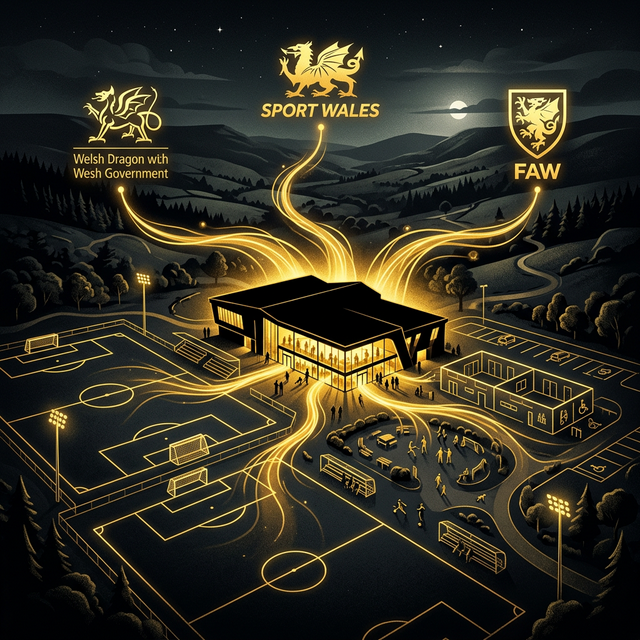
TL;DR: Sport Wales grants of £100,000-£250,000 are available for community football hubs, with the FAW and local authorities providing additional funding streams. Clubs that have secured grant funding report 30% participation increases, and 12 Cymru Premier clubs currently benefit from FAW/Sport Wales grants. This guide maps every funding source, details the application process, explains how to structure a community hub proposal, and provides real-world benchmarks from clubs that have successfully built multi-sport community facilities.
Why Community Hubs Matter
Community sports hubs are more than football infrastructure — they are multi-purpose facilities that serve as the social, sporting, and economic anchor of their communities. For football clubs, they represent something specific: a sustainable revenue model that generates income 7 days a week rather than 20-25 matchdays per year.
The economic logic is straightforward. A semi-professional football club with a traditional ground generates matchday revenue on approximately 20-25 days per year. The facility sits idle for the other 340+ days. A community hub — equipped with artificial pitches, fitness facilities, meeting rooms, and social spaces — generates daily income from pitch hire, coaching programmes, fitness memberships, and community events. The marginal revenue from these non-matchday activities can exceed the matchday revenue itself.
This model is particularly relevant in Wales, where the Cymru Premier's expansion from 12 to 16 clubs, the Wrexham effect driving 30-50% attendance growth, and growing participation in women's and youth football are creating demand for facilities that current infrastructure cannot meet.
The Funding Landscape
Overview of Available Funding
| Funding Source | Grant Range | Focus Area | Application Cycle |
|---|---|---|---|
| Sport Wales Capital Grants | £100K-£250K | Facility development | Annual (rolling) |
| FAW Facility Fund | £50K-£150K | Pitch and ground improvements | Annual |
| National Lottery (via Sport Wales) | £10K-£500K+ | Community sport development | Rolling |
| Local Authority Capital Programmes | £25K-£200K | Community facility improvements | Varies by council |
| Welsh Government Community Facilities Programme | £25K-£300K | Multi-purpose community spaces | Annual |
| UK Government Levelling Up Fund | £50K-£20M | Town centre/community regeneration | Bidding rounds |
| Football Foundation (England & Wales) | £25K-£500K | Pitch and facility development | Rolling |
| Community Ownership Fund | £50K-£250K | Community-owned asset development | Bidding rounds |
| Private Foundations (e.g., Garfield Weston) | £5K-£100K | Community and youth development | Rolling |
Key Statistics
| Metric | Value | Source |
|---|---|---|
| Average Sport Wales grant amount | £100K-£250K | Sport Wales, 2025 |
| Participation increase from funded facilities | 30% | FAW Community Reports, 2025 |
| Clubs receiving FAW/Sport Wales grants | 12 | FAW Financial Statements, 2025 |
| Average Cymru Premier attendance growth | 30-50% | FAW Annual Report, 2025 |
| Women's football attendance growth | 50% | Cymru Connect Analysis, 2025 |
| 4G pitch installations (Wales, 2020-2025) | 40+ | Sport Wales data |
| Average 4G pitch cost | £400-600K | Industry benchmarks |
| Average 4G pitch annual revenue (hire) | £40-80K | Funded facility reports |
How Community Hub Funding Works
The Funding Stack
Successful community hub projects rarely rely on a single funding source. The typical structure combines multiple grants with club/community contribution:
| Funding Component | % of Total | Typical Value | Notes |
|---|---|---|---|
| Sport Wales/National Lottery | 30-40% | £100-250K | Primary grant funding |
| FAW Facility Fund | 10-20% | £50-150K | Football-specific elements |
| Local Authority | 10-20% | £50-150K | Match funding or land contribution |
| Welsh Government programmes | 10-15% | £50-100K | Community facility elements |
| Club/community contribution | 15-25% | £50-200K | Cash, in-kind, or volunteer labour |
| Private sector | 5-10% | £25-75K | Naming rights, sponsorship |
A typical community hub project costs £500K-£1.5M, with 60-80% covered by grant funding and the remainder from club contributions, private investment, and community fundraising.
What Funders Want to See
Grant funders in Wales evaluate applications against consistent criteria:
| Criterion | What It Means | How to Evidence |
|---|---|---|
| Community need | Demonstrable demand for the facility | Consultation data, waiting lists, usage projections |
| Inclusivity | Access for underrepresented groups | Plans for women's football, disability access, youth programmes |
| Sustainability | Long-term financial viability | 5-year business plan with revenue projections |
| Partnership | Multi-stakeholder support | Letters from council, FAW, schools, community groups |
| Additionality | Facility fills a gap, not duplicates | Gap analysis of existing local provision |
| Governance | Competent management structure | Club structure, committee/board details |
| Match funding | Club/community financial contribution | Evidence of funds or fundraising plan |
The Application Process
| Stage | Duration | Activities |
|---|---|---|
| 1. Feasibility study | 2-3 months | Needs assessment, site survey, initial costing |
| 2. Community consultation | 1-2 months | Public meetings, surveys, stakeholder engagement |
| 3. Business plan development | 2-3 months | Revenue projections, governance structure, management plan |
| 4. Application preparation | 1-2 months | Form completion, supporting documentation |
| 5. Submission and review | 3-6 months | Funder assessment, site visits, clarifications |
| 6. Award and conditions | 1-2 months | Grant agreement, conditions, monitoring framework |
| 7. Procurement and build | 6-18 months | Tendering, construction, commissioning |
| Total timeline | 16-36 months | From concept to completion |
What a Community Hub Includes
Core Components
| Component | Typical Cost | Annual Revenue Potential | Priority |
|---|---|---|---|
| 4G artificial pitch (full size) | £400-600K | £40-80K (hire) | Essential |
| 4G artificial pitch (half size) | £150-250K | £20-40K (hire) | Alternative |
| Clubhouse/social space | £100-250K | £15-30K (events, hire) | High |
| Changing rooms (4-6 team) | £80-150K | Enables hire income | Essential |
| Fitness/gym facility | £30-80K | £10-25K (memberships) | Medium |
| Community meeting rooms | £30-60K | £5-15K (hire) | Medium |
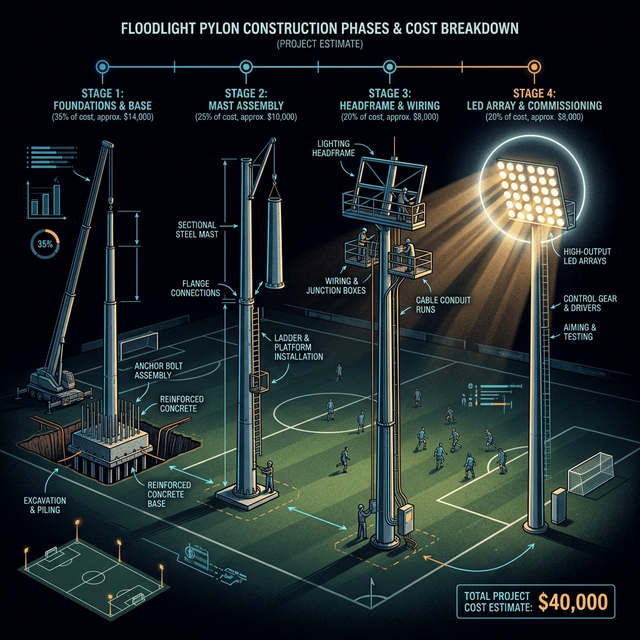
| Floodlighting (LED) | £80-150K | Enables evening use | Essential |
| Car parking | £30-80K | Practical necessity | High |
| Accessibility improvements | £20-50K | Compliance requirement | Essential |
| IT/AV infrastructure | £10-25K | Digital capability | Medium |
Revenue Model
A well-designed community hub generates multiple revenue streams:
| Revenue Stream | Est. Annual Value | Utilisation Assumption |
|---|---|---|
| 4G pitch hire (community) | £25-40K | 15-20 hours/week at £40-60/hour |
| 4G pitch hire (commercial) | £15-30K | 8-12 hours/week at £50-80/hour |
| Coaching programmes | £10-20K | Youth, women's, walking football |
| Fitness memberships | £10-25K | 50-100 members at £15-25/month |
| Room hire | £5-15K | Community groups, business meetings |
| Social/bar revenue | £10-20K | Matchday + events |
| Events and functions | £5-15K | Birthday parties, awards evenings |
| Holiday camps | £5-10K | School holiday programmes |
| Total non-matchday revenue | £85-175K |
Compare this to a traditional ground generating £0 on non-matchday days. The revenue impact of conversion to a community hub model is transformational for clubs operating at Cymru Premier level, where total revenue ranges from £200K to £1.5M. See the Revenue Breakdown for context.
Infrastructure Investment Areas
Artificial Pitches
The single most impactful community hub investment is a 4G artificial pitch. The Artificial Pitch Investment analysis covers the detailed cost-benefit case, but the summary figures are compelling:
| Metric | Natural Grass | 4G Artificial |
|---|---|---|
| Installation cost | £50-100K | £400-600K |
| Annual maintenance | £15-25K | £5-10K |
| Weekly usable hours | 8-12 | 40-60 |
| Annual hire revenue potential | £0-5K | £40-80K |
| Lifespan before replacement | Annual renewal | 8-12 years |
| All-weather capability | No | Yes |
Haverfordwest County's £500K 4G pitch installation (completed 2024) is the most recent Cymru Premier example. The club reports that community hire revenue has exceeded initial projections, with demand from youth teams, five-a-side leagues, and schools generating £50-70K annually. For further detail on pitch specifications, see the 3G/4G Pitch Guide.
Community Engagement Programmes
Funding supports programmes that increase participation among target groups:
| Programme | Target Group | Participation Impact | Funding Source |
|---|---|---|---|
| Girls' football academies | Girls aged 5-16 | +40-60% female participation | FAW, Sport Wales |
| Walking football | Over-50s | +25% senior participation | Sport Wales |
| Disability football | Disabled participants | +30% inclusive participation | Sport Wales, Disability Sport Wales |
| School partnerships | Primary/secondary schools | +20% youth participation | FAW, local authority |
| Holiday camps | Children aged 5-14 | +15% off-season participation | Commercial (self-funding) |
| Women's recreational leagues | Women aged 16+ | +50% female participation | FAW, Sport Wales |
These programmes serve dual purposes: they meet funders' inclusivity requirements (improving grant application success) and they generate participant fees that contribute to hub revenue.
Coaching and Development
Grant funding covers coaching qualifications, volunteer training, and youth development programmes that feed into the wider talent pipeline:
| Coaching Investment | Cost | Funding Coverage | Impact |
|---|---|---|---|
| UEFA C Licence (per coach) | £500-800 | 50-100% (FAW) | Entry-level qualification |
| UEFA B Licence (per coach) | £1,500-2,500 | 50-75% (FAW) | Advanced coaching capability |
| Safeguarding training | £100-200 | 100% (FAW) | Compliance requirement |
| First aid qualification | £100-300 | 100% (various) | Safety requirement |
| Community coaching programme | £5-10K | 75-100% (Sport Wales) | Structured delivery capability |
Case Studies
Haverfordwest County: The 4G Pitch Model
Haverfordwest County's £500K 4G pitch installation demonstrates the community hub model in action:
- Funding: Combination of Sport Wales grant, FAW Facility Fund, and club investment
- Completed: 2024
- Annual hire revenue: £50-70K (exceeding projections)
- Community users: 30+ local teams, school partnerships, coaching programmes
- Participation increase: 35% across youth and women's football
- Additional impact: Enhanced training conditions for the first team, supporting the club's £3.5M academy development plan
For the full Haverfordwest profile, see the Haverfordwest County Investment Profile.
The TNS Model: Full Commercial Integration
TNS (The New Saints) operates the most commercially integrated facility in the Cymru Premier. The Park Hall complex includes:
- Full-size 4G pitches for training and community use
- Hospitality and conference facilities generating year-round revenue
- Fitness facilities open to the public
- Youth academy infrastructure
TNS's £3.2M revenue — the highest in the Cymru Premier — is partly attributable to the non-matchday income generated by this integrated facility model. See the TNS Investment Profile for the financial breakdown.
Community Ownership Examples
Several Welsh clubs have used community ownership models to secure grant funding that is unavailable to private limited companies. Community Interest Companies (CICs) and Community Benefit Societies (CBSs) can access:
- Community Ownership Fund (up to £250K)
- Social enterprise grants
- Community shares (equity crowdfunding)
- Enhanced local authority support
For clubs considering this route, the governance structure must be established before applying for community-specific funding.
Funding Strategy by Club Type
Cymru Premier Clubs (£500K-£3M revenue)
| Priority | Investment | Funding Strategy |
|---|---|---|
| 1 | 4G pitch | Sport Wales + FAW + club contribution |
| 2 | Hospitality upgrade | Club investment + naming rights revenue |
| 3 | Training ground development | Sport Wales + FAW + private investment |
| 4 | Community programmes | FAW + Sport Wales participation grants |
Cymru North/South Clubs (£50-200K revenue)
| Priority | Investment | Funding Strategy |
|---|---|---|
| 1 | Small-sided 4G pitch | Football Foundation + local authority |
| 2 | Changing room improvements | FAW + local authority capital programme |
| 3 | Floodlight installation | FAW + club fundraising |
| 4 | Community coaching programmes | FAW + Sport Wales |
Women's Football Clubs
Women's football clubs can access additional gender-specific funding:
- FAW Women's Football Development Fund: Targeted at Adran league clubs
- Sport Wales Women in Sport programme: Facility and participation grants
- UK Sport funding: For clubs with international development potential
- Private foundations: Several foundations prioritise girls' and women's sport
For the women's football investment landscape, see the Best Women's Clubs to Invest In and the Women's Football Investment Guide.
The Application Checklist
| Item | Status | Notes |
|---|---|---|
| Needs assessment completed | Survey local demand | |
| Community consultation conducted | Minimum 2 public events | |
| 5-year business plan drafted | Include revenue projections | |
| Site survey and planning assessment | Pre-planning advice from council | |
| Partnership letters secured | FAW, council, schools, community groups | |
| Match funding identified | Club contribution + other grants | |
| Governance structure reviewed | Constitution, committee/board | |
| Inclusivity plan developed | Women's, disability, youth access | |
| Environmental impact assessment | If required by planning | |
| Professional cost estimates obtained | Minimum 2 contractor quotes | |
| Monitoring and evaluation framework | KPIs aligned to funder requirements |
Financial Sustainability
The critical question for any community hub is long-term financial sustainability. Grant funders will not support projects that require ongoing subsidy. The business plan must demonstrate:
Year 1-3 Projections
| Item | Year 1 | Year 2 | Year 3 |
|---|---|---|---|
| Pitch hire revenue | £30K | £45K | £55K |
| Programme revenue | £10K | £18K | £25K |
| Room/facility hire | £5K | £10K | £15K |
| Memberships | £5K | £12K | £18K |
| Events | £3K | £8K | £12K |
| Total revenue | £53K | £93K | £125K |
| Operating costs | £35K | £40K | £45K |
| Maintenance/sinking fund | £10K | £10K | £10K |
| Net surplus | £8K | £43K | £70K |
The sinking fund is essential: 4G pitches require replacement every 8-12 years at a cost of £150-250K. Annual contributions of £10-15K build the reserve needed to fund replacement without additional grants.
Integration with Football Operations
Community hub development should integrate with, not distract from, the club's football operations:
- Training priority: The first team and academy retain priority booking on the main pitch during designated hours
- Match preparation: The pitch surface must be maintained to playing standard, with community use restricted in the 48 hours before home matches
- Youth development: The hub's coaching programmes feed the club's academy pathway, creating a talent pipeline
- Supporter engagement: Community programmes build the next generation of supporters, sustainably growing the club's audience
For the relationship between facility investment and football performance, see the Stadium Development ROI analysis and the Infrastructure Guide.
Conclusion
Community sports hubs represent the most financially transformational investment available to Welsh football clubs below the professional level. The combination of available grant funding (covering 60-80% of capital costs), growing community demand for football facilities, and the revenue diversification benefits of daily facility hire creates a compelling business case.
The clubs that have built community hubs — Haverfordwest, TNS, and several Cymru North/South clubs — report participation increases of 30%+, annual non-matchday revenue of £50-175K, and enhanced community standing that strengthens sponsorship and volunteer networks.
For clubs considering this pathway, start with the needs assessment and community consultation. The funding is available; the demand is demonstrable. The bottleneck is almost always the quality of the application and the strength of the business plan.
For related analysis, see the Artificial Pitch Investment guide, the Matchday Revenue Optimisation benchmarks, and the Sponsorship Guide.
Source & Methodology
Funding data is sourced from Sport Wales grant programme documentation (2025), FAW Facility Fund guidelines, Football Foundation published criteria, and Welsh Government community programme terms. Participation impact figures are drawn from FAW Community Reports (2025) and Sport Wales outcome monitoring data. Revenue projections are based on funded facility performance data from Welsh and English community hub projects. Construction costs reflect current market rates from specialist contractors as of early 2026. All figures should be treated as indicative; actual costs and revenues will vary by location, specification, and management quality. Clubs should seek professional advice when preparing grant applications and business plans.