TL;DR: Eight of 12 Cymru Premier clubs now play on artificial surfaces, with adopters reporting 20-30% increases in facility usage and significant reductions in maintenance costs. A full-size 3G pitch installation costs £500K-£900K, while 4G surfaces run £700K-£1.2M — but payback periods of 5-8 years through community hire revenue, reduced maintenance, and eliminated fixture cancellations make artificial pitches one of the clearest infrastructure investments available to Welsh football clubs.
The Artificial Pitch Revolution in Welsh Football
Wales's relationship with natural grass football pitches has always been difficult. The country receives between 1,200mm and 3,000mm of rainfall annually, depending on location — among the highest in Europe. West-facing coastal areas and upland regions are particularly wet, and even the drier eastern valleys experience enough precipitation to make natural grass maintenance challenging and fixture cancellations a regular occurrence from November through March.
This climate reality has driven a fundamental shift in Welsh football's approach to playing surfaces. Eight of the 12 current Cymru Premier clubs now play their home fixtures on artificial pitches, and the proportion is set to increase further as the league expands to 16 clubs in 2026/27. The transition has not been without controversy — artificial surfaces remain a topic of debate across European football — but the practical and financial case in the Welsh context is overwhelming.
The Current Landscape: Who Plays on What
| Club | Surface Type | Pitch Installed | Certified For | Community Hire |
|---|---|---|---|---|
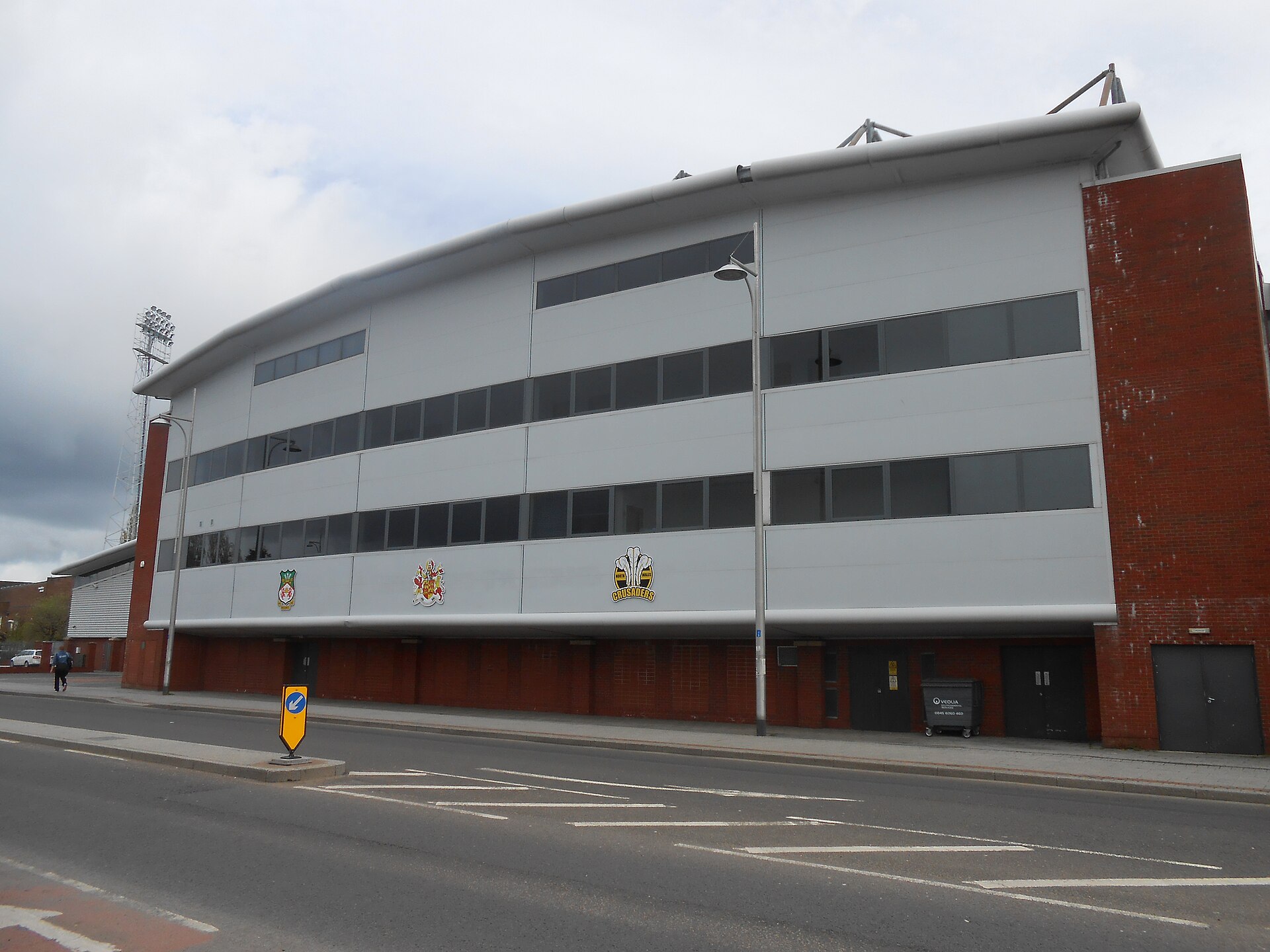
| TNS | 3G artificial | 2018 (resurfaced 2023) | UEFA/FAW | Yes — extensive |
| Connah's Quay Nomads | 3G artificial | 2019 | UEFA/FAW | Yes |
| Bala Town | 3G artificial | 2020 | FAW | Yes |
| Haverfordwest County | 3G artificial | 2021 | FAW | Yes — Ogi Bridge Meadow |
| Penybont FC | 3G artificial | 2020 | FAW | Yes |
| Caernarfon Town | 3G artificial | 2019 | FAW | Yes |
| Flint Town United | 3G artificial | 2022 | FAW | Yes |
| Aberystwyth Town | 3G artificial | 2021 | FAW | Yes |
| Barry Town United | Natural grass | — | FAW | Limited |
| Newtown AFC | Natural grass | — | FAW | Limited |
| Briton Ferry Llansawel | Natural grass | — | FAW | Limited |
| Pontypridd Town | Natural grass | — | FAW | Limited |
The clubs retaining natural grass surfaces share a common characteristic: they tend to be operating at the lower end of the Cymru Premier revenue spectrum and face capital constraints that make the upfront cost of artificial pitch installation prohibitive without external funding.
Understanding 3G and 4G Surfaces
The terminology around artificial pitches can be confusing. Understanding the differences is important for investors evaluating infrastructure upgrades.
3G (Third Generation)
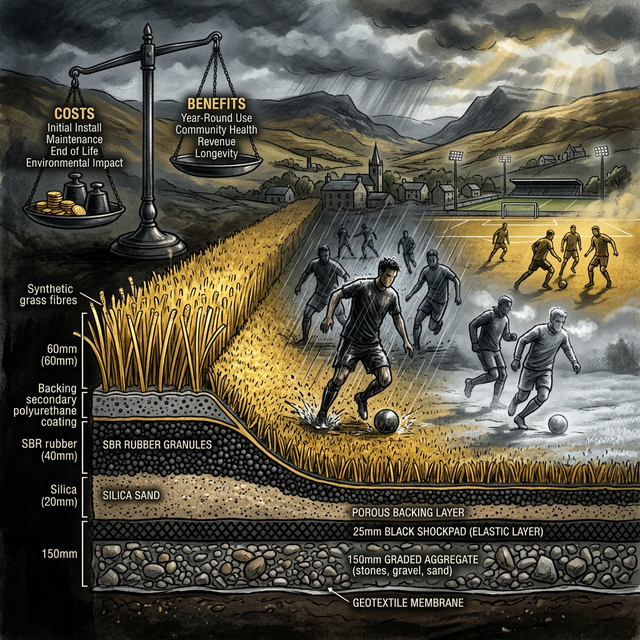
3G surfaces use synthetic grass fibres infilled with a combination of sand and rubber crumb (typically recycled tyre material). They represent the current standard for competitive football and are approved by FIFA and UEFA for professional matches when properly certified. Key characteristics:
- Lifespan: 8-12 years before resurfacing required
- Installation cost (full-size): £500K-£900K
- Annual maintenance: £15K-£25K (brushing, infill top-up, testing)
- Certification: FIFA Quality Pro or FIFA Quality certification required for European competition; FAW certification for domestic
- Playing characteristics: Consistent ball roll and bounce; faster than natural grass; reduced injury from impact (shock absorption built into sub-base)
4G (Fourth Generation)
4G surfaces eliminate the rubber crumb infill, using longer synthetic fibres that stand upright without infill support (or with minimal organic infill such as cork or coconut fibre). This addresses environmental concerns about rubber crumb migration and microplastic pollution. Key characteristics:
- Lifespan: 10-15 years
- Installation cost (full-size): £700K-£1.2M
- Annual maintenance: £10K-£20K (lower than 3G due to no infill management)
- Certification: Emerging FIFA/UEFA certification; not yet universally approved for all competition levels
- Playing characteristics: Closer to natural grass feel; reduced skin abrasion; improved player perception
Which Should Welsh Clubs Choose?
For most Cymru Premier clubs, 3G remains the practical choice. The certification framework is established, installation costs are lower, and the supply chain for installation and maintenance is well-developed in Wales. 4G surfaces are appropriate for clubs with larger budgets or those planning new-build facilities where the higher upfront cost can be justified by the longer lifespan and reduced maintenance requirements.
The Financial Case for Artificial Pitches
The financial argument for artificial pitch adoption in Welsh football is built on three pillars: eliminated cancellations, reduced maintenance, and new revenue streams.
Eliminated Fixture Cancellations
Welsh clubs playing on natural grass surfaces lose an average of 4-8 home fixtures per season to waterlogging and poor pitch conditions. Each cancellation carries direct costs:
| Cost Category | Per Cancellation | Per Season (6 avg.) |
|---|---|---|
| Lost gate receipts | £500-£2,000 | £3,000-£12,000 |
| Lost matchday F&B | £200-£800 | £1,200-£4,800 |
| Rescheduling costs (travel, officials) | £300-£600 | £1,800-£3,600 |
| Lost broadcast opportunity | £0-£5,000 | £0-£10,000 |
| Total per season | £6,000-£30,400 |
For clubs at the upper end of the revenue spectrum, fixture cancellations can cost £20,000-£30,000 per season — a significant sum relative to typical Cymru Premier operating budgets of £150K-£500K.
Reduced Maintenance Costs
Natural grass pitch maintenance in the Welsh climate is labour-intensive and expensive. Clubs report annual maintenance costs of £30K-£60K for a natural grass playing surface, covering mowing, fertilisation, aeration, drainage maintenance, reseeding, pest control, and seasonal renovation.
Artificial pitch maintenance is dramatically simpler and cheaper:
| Maintenance Task | Natural Grass (Annual) | Artificial (Annual) | Saving |
|---|---|---|---|
| Regular upkeep (mowing/brushing) | £12K-£20K | £5K-£8K | 50-60% |
| Seasonal renovation | £8K-£15K | £0 | 100% |
| Drainage maintenance | £3K-£8K | £1K-£2K | 60-75% |
| Specialist treatments | £5K-£10K | £2K-£4K | 50-60% |
| Equipment costs | £5K-£10K | £2K-£4K | 50-60% |
| Total | £33K-£63K | £10K-£18K | ~60% |
The annual saving of £20K-£45K on maintenance costs alone contributes meaningfully to the payback calculation on the initial installation investment.
Community Hire Revenue
The most transformative financial benefit of artificial pitches is the ability to generate community hire revenue. A natural grass pitch can typically sustain 6-8 hours of use per week during the season without degradation. An artificial pitch can handle 40-60 hours per week, year-round, without quality deterioration.
Clubs with artificial pitches report community hire revenue of £30K-£80K annually, depending on location, pricing, and demand. The revenue model typically includes:
| Hire Category | Rate | Weekly Hours | Annual Revenue |
|---|---|---|---|
| Junior football training | £40-£60/hour | 10-15 | £20K-£45K |
| Adult 5/6/7-a-side leagues | £60-£90/hour | 8-12 | £25K-£55K |
| Schools and community groups | £30-£50/hour | 5-8 | £8K-£20K |
| Coaching academies | £50-£70/hour | 3-5 | £8K-£18K |
| Weekend tournaments | £200-£500/event | Monthly | £2K-£6K |
The most commercially successful Cymru Premier clubs — TNS and Connah's Quay in particular — generate substantial community hire revenue that subsidises first-team operations. Haverfordwest County's Ogi Bridge Meadow has become a case study in how artificial pitch investment can transform a club's revenue profile, with the club reporting a 20-30% increase in overall facility usage since installation.
Installation Process and Timeline
For clubs considering artificial pitch installation, the process typically follows this timeline:
| Phase | Duration | Key Activities |
|---|---|---|
| Feasibility study | 2-3 months | Site assessment, cost-benefit analysis, planning consultation |
| Funding applications | 3-6 months | Sport Wales, FAW, local authority, and private funding bids |
| Planning permission | 2-4 months | Local authority planning application (often required for floodlighting) |
| Procurement | 2-3 months | Tender process, contractor selection |
| Construction | 3-5 months | Site preparation, sub-base installation, surface laying, line marking |
| Certification | 1-2 months | FIFA/FAW testing and certification |
| Total | 13-23 months |
The total timeline from initial decision to first match is typically 18-24 months, though clubs with existing planning permission and secured funding can compress this significantly.
Funding Sources
Artificial pitch installation is rarely funded entirely from club resources. The typical funding mix includes:
| Funding Source | Contribution Range | Requirements |
|---|---|---|
| Sport Wales | £100K-£300K | Community access commitment, match funding |
| FAW Facility Fund | £50K-£200K | FAW licensing compliance, development plan |
| Local authority | £50K-£150K | Community benefit assessment, local employment |
| Club reserves/borrowing | £100K-£300K | Business plan, repayment capacity |
| Private sponsors | £50K-£200K | Naming rights, branding opportunities |
The requirement for community access commitments from public funders actually benefits clubs commercially — it obligates them to develop the community hire revenue stream that makes the pitch financially self-sustaining.
For broader infrastructure funding opportunities, see our Community Sports Hub Wales Funding guide. For how pitch investment fits into wider stadium development strategies, see the Stadium Development ROI analysis.
UEFA and FAW Certification Requirements
Artificial pitches used for competitive matches in the Cymru Premier and European competition must meet specific certification standards. Clubs with European ambitions (league champions qualify for UEFA competition) face additional requirements.
| Standard | Requirement | Testing Frequency | Cost |
|---|---|---|---|
| FAW domestic | FAW pitch testing protocol | Annual | £2K-£4K |
| FIFA Quality | Ball roll, bounce, shock absorption | Every 2 years | £5K-£8K |
| FIFA Quality Pro | Enhanced performance criteria | Annual | £8K-£12K |
| UEFA licensing | FIFA Quality Pro or equivalent | Per competition entry | Included in above |
Maintaining certification requires regular maintenance and periodic testing. Clubs should budget £5K-£12K annually for testing and certification costs, in addition to standard maintenance.
The Debate: Player Welfare and Sporting Considerations
Artificial pitches remain controversial among players, coaches, and fans. The main objections centre on:
Injury concerns: Some studies suggest higher rates of certain injuries (particularly skin abrasions and ankle injuries) on artificial surfaces. However, modern 3G and 4G surfaces have significantly improved shock absorption and surface characteristics, and the evidence base is mixed. Welsh clubs report that injury rates on well-maintained artificial pitches are comparable to natural grass.
Playing style impact: Artificial surfaces produce faster ball speeds and more consistent ball behaviour, which favours certain playing styles. Some coaches argue this creates an unfair home advantage. Others counter that consistency is a feature, not a bug — it eliminates the variable of pitch quality and rewards technical football.
Player preference: Surveys consistently show player preference for natural grass, though the gap narrows with younger players who have grown up playing on artificial surfaces. As the proportion of pitches that are artificial increases across Welsh football, player acceptance is likely to continue improving.
Aesthetic and tradition: Some fans and clubs value the tradition of natural grass and view artificial surfaces as aesthetically inferior. This is a legitimate cultural preference, but it must be weighed against the practical and financial realities of maintaining natural grass in the Welsh climate.
Investor Takeaway
For investors evaluating Welsh football clubs, artificial pitch status is a key factor in assessing a club's financial sustainability and growth potential. Clubs with artificial pitches have:
- More reliable fixture schedules (no cancellations)
- Lower annual operating costs (reduced maintenance)
- Diversified revenue streams (community hire)
- Better training facilities (consistent year-round surface)
- Stronger positions in FAW licensing assessments
Clubs without artificial pitches represent both a risk (higher operating costs, cancellation exposure) and an opportunity (pitch installation as a value-creating investment). For the broader Infrastructure Investment Guide, see our dedicated analysis.
"Artificial pitches have transformed the financial model for Welsh clubs. The ability to hire out a surface 7 days a week, 12 months a year, turns a cost centre into a revenue stream. For any club still on natural grass in Wales, the question is not whether to switch — it is when."
— A Cymru Premier club facilities manager
Data sourced from FAW licensing reports, Sport Wales infrastructure surveys, club financial filings, FIFA pitch testing standards, and Cymru Connect site visits and club interviews. Installation costs reflect 2025-26 market rates for full-size (100m x 64m) pitches including sub-base, surface, line marking, and basic floodlighting. March 2026.