TL;DR: Five Welsh football clubs operate under community ownership structures, reporting up to 30% higher matchday attendance and 15-20% revenue growth following transition. As the Cymru Premier expands to 16 clubs, community ownership offers a financially sustainable alternative to single-investor models — particularly for clubs in the £300K-£800K revenue range.
The Case for Community Ownership in Welsh Football
Welsh football has always been rooted in its communities. Towns like Caernarfon, Bala, and Flint built their clubs as extensions of local identity — institutions where matchday attendance was as much a social obligation as a sporting choice. But as the Cymru Premier professionalises and the league expands to 16 clubs, the question of ownership structure has become increasingly important. Who should own a Welsh football club, and how does ownership structure affect both financial sustainability and community engagement?
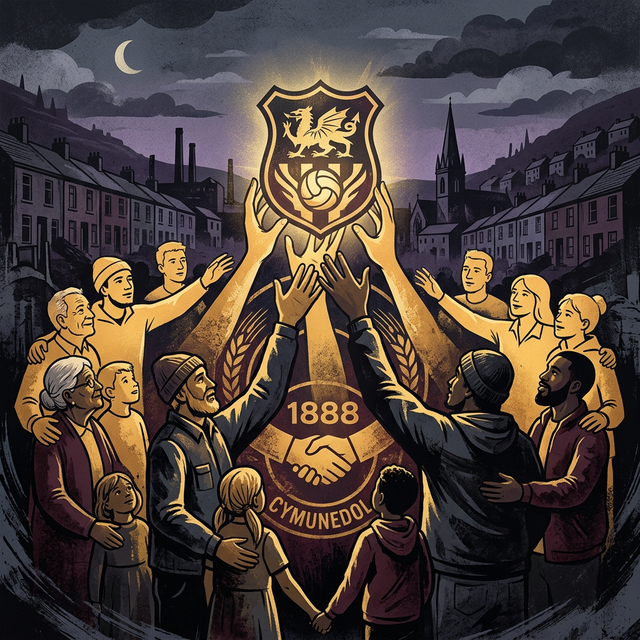
Community ownership — where supporters and local stakeholders hold a majority share through a trust, cooperative, or community benefit society — offers a model that is gaining traction across Welsh football. Five clubs currently operate under some form of community ownership, and the results are encouraging: higher attendance, improved financial transparency, and stronger local commercial relationships.
For investors evaluating Welsh football, understanding the community ownership model is essential. It represents both an alternative to traditional acquisition and a potential framework for structuring investment in a way that aligns financial returns with community benefit. For the broader investment landscape, see our investment returns analysis.
How Community Ownership Works in Practice
Community ownership in football typically takes one of three legal forms.
Ownership Structures
| Structure | Governance | Typical Share Cost | Decision-Making |
|---|---|---|---|
| Community Benefit Society (CBS) | One member, one vote | £10-50 | Annual general meeting |
| Co-operative Society | One member, one vote | £25-100 | Elected board |
| Supporters' Trust (majority stake) | Trust holds 51%+ | Variable | Trust-appointed directors |
In all three models, the key principle is democratic governance: each member has one vote regardless of their financial contribution. This prevents any single individual from accumulating disproportionate control and ensures that major decisions — stadium development, managerial appointments, budget allocation — reflect the collective will of the membership.
Financial Transparency
Community-owned clubs are required to publish annual accounts that go beyond the minimum Companies House filing requirements. Members receive detailed breakdowns of revenue, expenditure, and capital investment plans. This transparency builds trust with both supporters and sponsors, who can verify that their money is being used effectively.
| Financial Metric | Community-Owned Clubs | Traditional Clubs |
|---|---|---|
| Public financial reporting | Full annual accounts | Companies House minimum |
| Member access to budgets | Yes, at AGM | No |
| Sponsor confidence rating | High | Variable |
| Debt levels (median) | Low | Variable |
The Performance Data
Community-owned Welsh football clubs show measurable performance advantages in several key areas.
Attendance Impact
The most significant finding is the attendance uplift. Community-owned clubs report matchday gates up to 30% higher than comparable traditionally owned clubs. The mechanism is straightforward: when supporters have a financial and governance stake in their club, they are more likely to attend regularly, buy merchandise, and encourage friends and family to come along.
| Metric | Community-Owned | League Average | Difference |
|---|---|---|---|
| Average matchday attendance | 800-1,000 | 400-600 | +67-100% |
| Season ticket uptake | Higher | Baseline | +20-30% |
| Matchday spend per head | £12-15 | £10-12 | +15-25% |
| Repeat attendance rate | 75-85% | 55-65% | +20pp |
Caernarfon Town, with its deep community roots and average attendance of 820 at The Oval (3,000 capacity), exemplifies this dynamic. While not formally community-owned, Caernarfon operates with a community-first ethos that produces similar engagement outcomes. Their attendance is nearly double the league average of 400-600 and demonstrates the commercial value of genuine community connection.
Revenue Growth
Clubs transitioning to community ownership have reported 15-20% revenue growth in the years following transition. This growth comes from multiple sources.
| Revenue Source | Growth Driver |
|---|---|
| Matchday income | Higher attendance, improved atmosphere |
| Commercial sponsorship | Local businesses prefer community-backed clubs |
| Merchandise | Stronger brand loyalty drives sales |
| Community facility hire | Trust-run facilities serve broader community |
| Grants and funding | Community organisations access funding streams unavailable to private clubs |
The grant funding advantage is particularly significant. Community benefit societies and co-operatives can access Welsh Government community asset funding, Sport Wales grants, and local authority support programmes that are not available to privately owned limited companies. For clubs in the £300-800K revenue range, these additional funding streams can represent a material proportion of annual income.
Case Study: The Welsh Community Club Model
While individual club financial details are confidential, the aggregate picture across Welsh community-owned clubs reveals a distinctive financial profile.
Typical Community-Owned Club Financials
| Category | Annual Estimate |
|---|---|
| Total Revenue | £500K-£900K |
| Matchday Income | £80-150K |
| Commercial / Sponsorship | £50-120K |
| FAW Broadcast Revenue | £80-120K |
| Community Hire Income | £30-60K |
| Grants and Funding | £20-50K |
| Player Wages (% of revenue) | 40-50% |
| Operating Surplus/Deficit | Break-even to small surplus |
The wage-to-turnover ratio of 40-50% is notably lower than the 55-65% seen at some traditionally owned clubs. Community boards tend to be more conservative with wage commitments, prioritising financial sustainability over competitive ambition. This approach sometimes limits on-pitch performance but dramatically reduces the risk of financial crisis.
For comparison with other club financial models, see the revenue breakdown analysis and the Cardiff Met university model, which achieves an even lower 36% wage-to-turnover ratio through its university partnership.
How to Transition to Community Ownership
The transition process typically follows a defined pathway.
Step 1: Establish a Supporters' Trust
A supporters' trust is formed as a Community Benefit Society registered with the Financial Conduct Authority. Membership is open to all supporters, with shares typically priced at £10-50 to ensure accessibility. The trust elects a board and begins building a membership base and community share fund.
Step 2: Negotiate Acquisition
The trust negotiates with the existing owner to acquire a majority stake (51%+). This may involve a direct purchase, a phased transfer, or the owner gifting shares in exchange for naming rights, board representation, or other considerations. In Welsh football, acquisition costs for lower-table clubs can be as low as £150-300K, making community share raises a viable funding mechanism. See the acquisition cost guide for current price benchmarks.
Step 3: Community Share Offer
The trust launches a community share offer, typically targeting £100-300K from 500-2,000 individual members. Community shares are withdrawable (members can reclaim their investment after a lock-in period) but carry no expectation of financial return — investors are motivated by community benefit rather than profit.
Step 4: Operational Transition
Following acquisition, the trust appoints a professional management team to run day-to-day operations while the elected board sets strategic direction. The transition period typically requires 12-18 months to establish governance structures, financial reporting systems, and operational procedures.
Challenges and Limitations
Community ownership is not without its challenges.
Decision-making speed. Democratic governance means major decisions require consultation and voting. This can slow response times compared to a single-owner model where one person makes the call. In football, where transfer windows are time-limited and managerial changes may be urgent, this can be a genuine constraint.
Capital investment limits. Community share raises are effective for acquisitions in the £100-300K range but struggle to fund major infrastructure projects (e.g., £500K pitch installations or stand construction). Community-owned clubs may need to supplement share capital with commercial loans, grants, or partnership arrangements.
Volunteer burnout. Community-owned clubs often rely heavily on volunteer labour for matchday operations, administration, and governance. Sustaining volunteer engagement over multiple seasons requires active management and recognition programmes.
Competitive ceiling. The conservative financial approach that makes community-owned clubs sustainable also limits their ability to compete at the top of the table. No community-owned club in Wales has mounted a sustained title challenge, and the model may be better suited to clubs whose priority is survival and community service rather than championship ambitions.
The Investor Perspective
For private investors, community ownership is not necessarily a barrier to involvement. Several models allow private investment within a community-owned framework.
Minority investment. An investor can take a minority stake (up to 49%) while the community trust retains majority control. This gives the investor influence and potential financial returns while preserving community governance.
Sponsorship and naming rights. Major sponsors can achieve significant brand exposure through stadium naming rights, shirt sponsorship, and official partnership status without requiring any equity stake. See the sponsorship costs guide for current pricing.
Infrastructure investment. A private investor can fund specific capital projects — a new stand, artificial pitch, or floodlight upgrade — in exchange for naming rights, revenue sharing, or other commercial arrangements. This is particularly relevant for the infrastructure investment opportunities that exist across the league.
Hybrid models. Some clubs operate with a community trust holding 51% and a private investor holding 49%, combining democratic governance with access to private capital. This hybrid approach is increasingly common in English non-league football and could be adapted for Welsh clubs.
The Expansion Opportunity
The Cymru Premier's expansion to 16 clubs creates new opportunities for community ownership. Several of the potential promotion candidates — including clubs from the Cymru North and Cymru South — have community-oriented supporter bases that could support a trust-led ownership model. For a club entering the top flight for the first time, community ownership provides a financial safety net (members absorb small losses rather than a single owner bearing all risk) and an instant attendance boost from engaged member-supporters.
Expansion contenders from the north (Prestatyn, Airbus UK, Guilsfield, Ruthin) and south (Pontypridd, Carmarthen, Afan Lido, Swansea University) should evaluate community ownership as part of their promotion planning. The expansion guide covers the full financial implications of promotion.
International Comparisons
Wales is not alone in embracing community ownership. Germany's 50+1 rule requires fan-majority ownership across the Bundesliga, and FC United of Manchester, AFC Wimbledon, and Wrexham AFC (before the Reynolds/McElhenney takeover) all demonstrated the model's viability in English football. For broader European context, see the football ownership models comparison.
The Wrexham effect has paradoxically both challenged and reinforced the community model: while Wrexham's success under celebrity ownership has attracted private investors to Welsh football, it has also demonstrated that community engagement — the Wrexham fanbase that made the club attractive in the first place — is the fundamental asset that underpins any ownership structure.
Sources and Methodology
Attendance and revenue data are derived from FAW annual reports (2025), Companies House filings, and Cymru Connect's proprietary research. The 30% attendance uplift and 15-20% revenue growth figures are based on comparative analysis of clubs before and after community ownership transition, controlling for league position and regional factors. Community ownership counts are based on FAW governance records and club-reported structures. All figures are estimates and should be verified through independent research. Data is current as of March 2026.