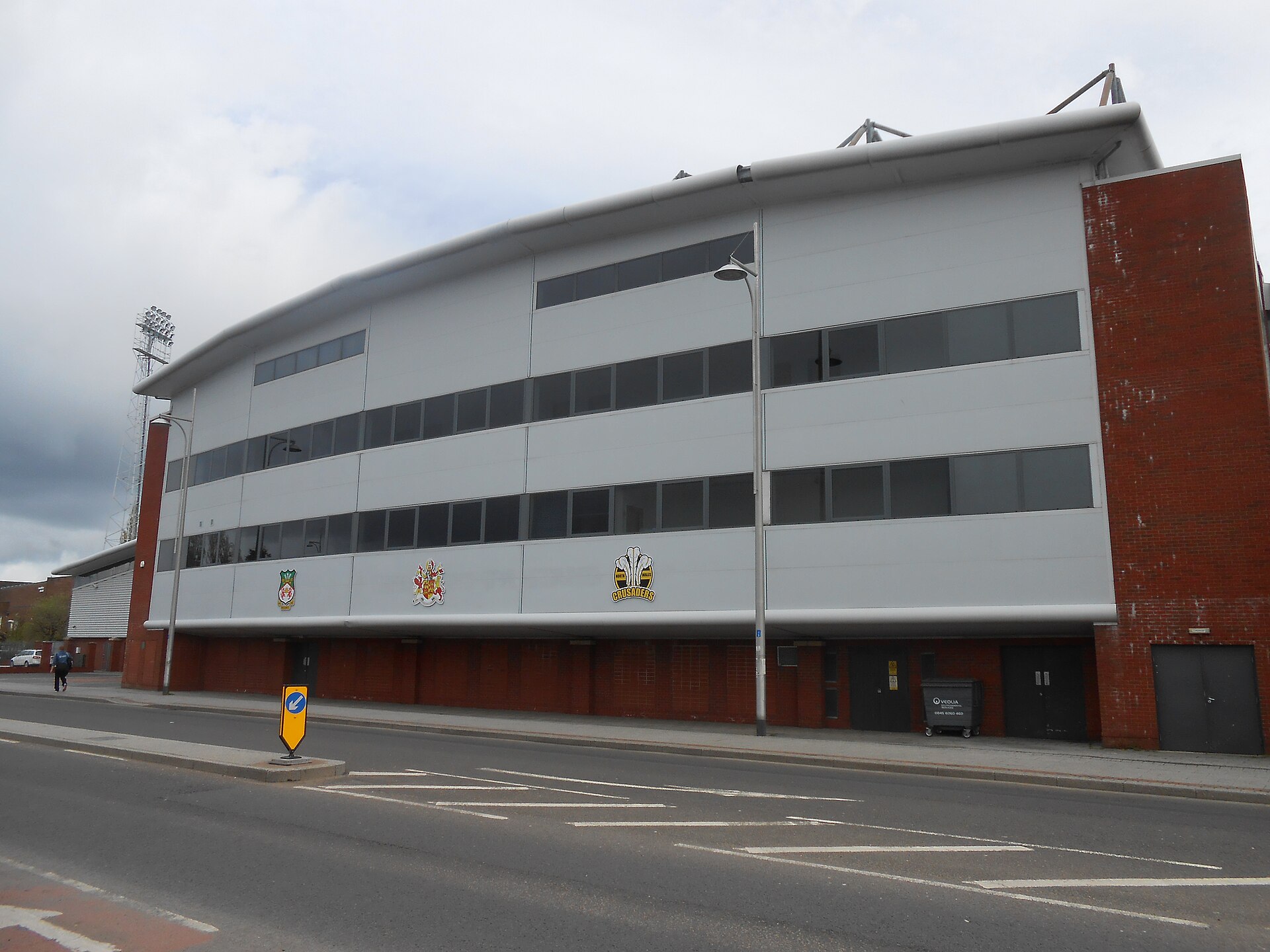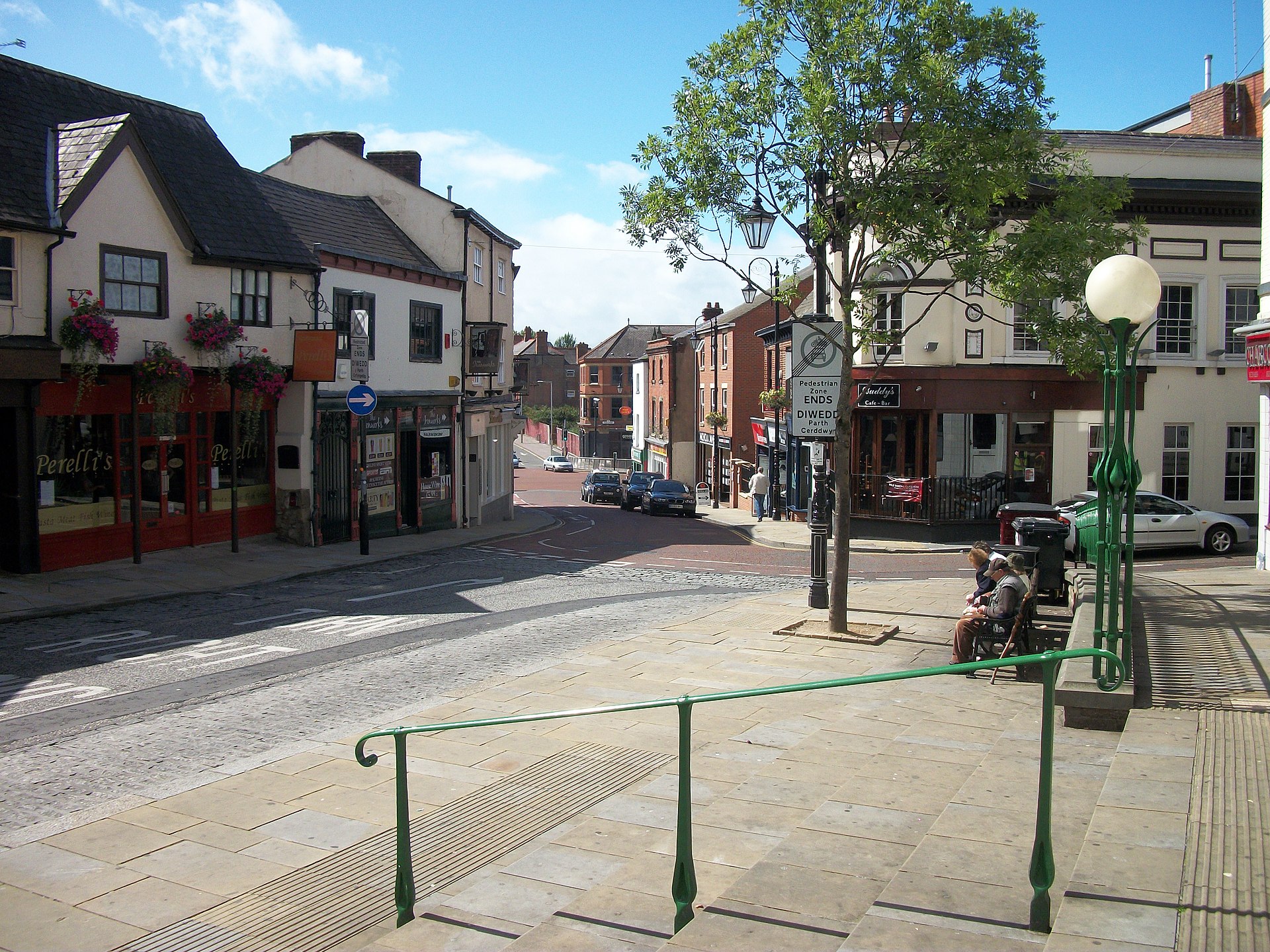
TL;DR: Celebrity football ownership has a long and mostly undistinguished history, but the Wrexham model represents something qualitatively different — a content-first, brand-driven acquisition strategy that has turned a £2 million purchase into an estimated £50 million+ asset in under five years. The blueprint is not about fame. It is about narrative, community, football expertise, and patience. And it is transferable — particularly to the Cymru Premier, where comparable conditions exist at a fraction of the cost.
When two Hollywood actors bought a bankrupt Welsh football club in 2020, the sports world laughed. Five years later, investors around the world are studying the Wrexham blueprint as the most sophisticated model of football club value creation since Roman Abramovich walked into Stamford Bridge. The difference is that Reynolds and McElhenney did it on a shoestring, without a petrostate, without a Premier League parachute payment, and without abandoning the community that the club had served for over 150 years.
A Brief History of Celebrity Football Ownership
The relationship between fame and football ownership is older than most people assume. Elton John became chairman of Watford in 1976 — appointing Graham Taylor as manager and guiding the club from the Fourth Division to the First Division and an FA Cup final in the space of eight years. By any measure, Elton John's ownership of Watford was a success: structured, football-literate, and community-rooted. His genuine love of the club was never in doubt, but what set him apart from the vanity-project owners who would follow was that he hired the right football people and trusted them.
The history between then and now is littered with cautionary tales. Pop stars, film actors, and sporting legends have bought clubs for reasons ranging from genuine passion to tax efficiency to raw ego. Most of these experiments ended in either indifference — the celebrity drifting away when the novelty faded — or outright disaster, with clubs left worse off financially and structurally than before the high-profile owner arrived.
Drew Carey's involvement with Seattle Sounders MLS is an instructive example of the middle path: a celebrity with genuine enthusiasm who became part of the ownership consortium when the club entered MLS in 2009, but whose role was always institutional rather than transformative. Carey provided profile and access; the club's operational leadership provided strategy. His involvement faded from public consciousness as the club matured. This is the benign version of celebrity ownership failure — not damaging, but not value-creating in any systematic way.
What changed the equation was the emergence of social media and the economics of content. Before YouTube, Instagram, and streaming platforms, a celebrity buying a football club was a story for one news cycle. After those platforms, a celebrity buying a football club can be a story that runs indefinitely — provided there is a content strategy to sustain it. This is the shift that makes the modern era of celebrity ownership categorically different from anything that came before.
It is also worth noting the alternative model that was, until Wrexham, considered the gold standard for intelligent lower-league ownership: Matthew Benham's data-led approach at Brentford and FC Midtjylland. Benham — a professional gambler who built a fortune from sports analytics — acquired Brentford in 2012 and applied statistical modelling to recruitment, tactics, and club strategy. The results were extraordinary: Brentford reached the Premier League in 2021 after decades in the lower divisions, with a squad assembled for a fraction of the cost of comparable clubs. Benham's model is analytical, unglamorous, and largely invisible — the opposite of Reynolds and McElhenney's approach. Both models work. The Wrexham model simply generates more noise, which, as it turns out, is commercially valuable in itself.
The Wrexham Blueprint: What They Did Differently
The fundamental difference between the Reynolds and McElhenney acquisition and every comparable celebrity ownership before it was that they arrived with a content strategy, not just money. From the moment the deal was agreed in late 2020, the plan was not simply to own a football club — it was to document the ownership of a football club in a way that would generate commercial value independently of the club's results on the pitch.
Reynolds's instinct was shaped by his experience building Aviation Gin into a billion-dollar brand without conventional advertising — using storytelling, humour, and authenticity as the primary commercial levers. His production company, Maximum Effort, applied exactly the same philosophy to Wrexham. Every announcement, every setback, every transfer, every match was potential content. The club was not just playing football; it was producing a story with a global audience.
The decision to make the documentary — Welcome to Wrexham — before the takeover was even completed is the detail that most distinguishes this acquisition from all predecessors. Most owners would have waited to see if the club was worth documenting. Reynolds and McElhenney understood that the acquisition itself was the product. The uncertainty, the learning curve, the community resistance, and the gradual conversion of sceptics were all narrative gold. They did not need Wrexham to win the FA Trophy in Year One; they needed Wrexham to be a compelling story, which a 150-year-old bankrupt Welsh club absolutely was.
Community-first messaging was the second distinctive feature. Every public statement from the new owners emphasised the town of Wrexham — its history, its people, its industrial heritage, its marginalisation. Reynolds and McElhenney were not buying a football club; they were investing in a community. This framing was commercially clever, but it also appeared to be genuinely felt, which made it land differently than the cynical community-washing that characterises some high-profile takeovers. The residents of Wrexham, initially sceptical of two Californian millionaires, gradually became the most powerful advocates for the project — because the project was demonstrably, visibly about them.
On the football side, Reynolds and McElhenney stayed in their lane. They appointed Phil Parkinson — an experienced English Football League manager — and largely left him to make football decisions. The owners were visible at matches, vocal in their support, and willing to spend money on the squad, but they did not pick the team, override the manager in public, or pretend to football expertise they did not have. This combination — serious commercial ambition alongside genuine deference to football professionals — is rare in owner profiles at any level, but it is arguably the most important element of the Wrexham blueprint.
The funding model deserves specific attention. The initial acquisition cost was modest, but Reynolds and McElhenney subsequently invested heavily — estimated at £10 million or more in the first three years — in ground improvements, squad investment, and commercial infrastructure. Crucially, much of this was financed through commercial deals that the Wrexham brand attracted. A shirt sponsorship worth multiples of the club's previous deals, an equipment deal with Adidas, partnership with TikTok, and a variety of international partnerships all flowed from the increased profile. The owners were not simply writing cheques; the club was increasingly generating the commercial income to fund its own development.
The Investment Numbers
The financial trajectory of Wrexham AFC since the Reynolds and McElhenney acquisition represents one of the most remarkable value-creation stories in modern football:
- Acquisition cost: approximately £2 million (agreed November 2020, completed February 2021)
- Estimated total investment (Years 1-3): £10 million+ in squad, infrastructure, and commercial development
- Revenue trajectory: from approximately £2 million per year pre-acquisition to a projected £8-10 million+ following promotion to League One
- Estimated current valuation: £50 million+ (multiple independent assessments, 2025)
- Prospective valuation (Championship): analysts estimate £100 million+ if the club reaches the Championship, based on broadcast rights and commercial scale at that level
The return-on-investment thesis is straightforward: if Reynolds and McElhenney invested £12 million in total (acquisition plus subsequent funding) and the club is now worth £50 million, the current paper return is approximately 4x invested capital in five years — a performance that would satisfy most institutional investors, achieved through a football club in North Wales.
The more speculative but plausible scenario is more striking still. A Championship club in the English football pyramid — which Wrexham could realistically reach by 2027-28 if progress continues — commands valuations of £150-250 million or more for clubs with significant supporter bases and commercial infrastructure. At that level, the total return on a £12 million investment would exceed 10x, which is venture-capital territory applied to a sport that many consider financially unsophisticated.
Comparable Models That Work
| Model | Club / Example | Key Feature | Outcome |
|---|---|---|---|
| Narrative ownership | Wrexham AFC | Documentary + celebrity profile | £50M+ valuation, League One |
| Data / analytics | Brentford FC | Matthew Benham model | Premier League |
| Community ownership | AFC Wimbledon | Fan trust | League One stability |
| Consortium | Forest Green Rovers | Ethical / green brand | League One (relegated) |
| Regional champion | TNS (Wales) | Dominance in smaller market | Consistent European revenue |
Each model demonstrates that there is no single correct approach to intelligent football club ownership. What they share is clarity of purpose: each ownership structure understands what it is trying to achieve and organises its resources accordingly. The failure cases — and there are many — are typically characterised by ambiguity: owners who want the prestige of football ownership without clarity about the operational or commercial model that will sustain it.
Forest Green Rovers is a particularly instructive case. Dale Vince's green-brand acquisition generated significant media coverage and attracted sponsors interested in environmental association. The club reached League One. But the brand value was not sufficient to build a sustainable sporting model, and relegation in 2023 demonstrated that commercial differentiation alone cannot overcome insufficient football investment. The lesson is not that the ethical-brand model is wrong; it is that commercial and sporting investment must be co-ordinated.
What Doesn't Work: Celebrity Ownership Failures
Wrexham itself had been a case study in ownership failure before Reynolds and McElhenney arrived. The club spent years under a succession of owners who lacked either the capital or the commitment to stabilise it, culminating in the Supporters' Trust taking control in 2011 and maintaining the club through the National League wilderness years. The Trust period preserved Wrexham's existence but could not generate the investment required to return to the Football League — a fact the supporters themselves acknowledged in voting to approve the Reynolds and McElhenney takeover.
The broader landscape of American investment in English football is cautionary. Several American ownership groups — drawn by the Premier League's global broadcast revenues — have struggled to translate financial firepower into football success. The common failure modes are: importing American sports management practices that do not translate to English football culture; underestimating the importance of community relationships; prioritising financial engineering over sporting investment; and, most damaging of all, lacking genuine enthusiasm for football as a game.
The "vanity project" trap is the most common celebrity ownership failure: an owner who wants a trophy cabinet rather than a business, who measures success in Cup runs rather than revenue growth, and who loses interest when the trophies do not arrive. This owner typically overspends on wages in the short term, neglects infrastructure and commercial development, and eventually sells — often at a loss — leaving the club worse off than before. The pattern repeats with sufficient regularity that it should be considered a structural risk in any celebrity ownership scenario.
Research from football finance academics consistently shows that clubs with dual competence — football expertise alongside commercial acumen — consistently outperform clubs where one or the other is absent. Reynolds and McElhenney are the extreme example of commercial acumen; Phil Parkinson provided the football expertise. Matthew Benham at Brentford holds both competences himself. The clubs that fail are typically those where commercial or football expertise is missing entirely.
The Wrexham Model Applied to Welsh Football
Here is the key insight that every potential investor in Welsh football should absorb: you do not need Ryan Reynolds. You need the conditions that Reynolds and McElhenney found at Wrexham and exploited so brilliantly — and those conditions exist across the Cymru Premier.
What you actually need is:
A club with a genuine community story. Every Cymru Premier club has one. Bala Town's improbable rise through the Welsh pyramid. Haverfordwest County's geographical isolation in the far west of Wales. Connah's Quay Nomads' emergence from industrial Deeside. These are stories with texture, history, and human interest — exactly the raw material that makes compelling content.
Owners willing to invest in storytelling, not just players. A social media manager, a club photographer, and a videographer cost less than a single semi-professional player's wages. The return on that investment — in sponsor value, supporter engagement, and media attention — typically exceeds the return on the player.
A clear content and media strategy from day one. The mistake of most lower-league clubs is treating content as an afterthought. The Wrexham model inverts this: content strategy precedes everything, because content is what creates the audience, and the audience is what creates the commercial value.
Partnership with football professionals for on-pitch decisions. An investor with no football background who insists on controlling squad selection is a common failure mode. The model that works — every time, at every level — separates commercial and sporting decision-making while ensuring both are genuinely competent.
Patience. Wrexham took four years from acquisition to Football League promotion. Cymru Premier investors should plan for a five-to-seven-year value-creation horizon, not a three-year exit.
Is the Blueprint Transferable?
The honest answer is yes — with important qualifications. The Wrexham story benefited from specific factors that cannot be entirely replicated: the personal profiles of two globally famous actors; the serendipitous quality of the story; the moment in time, when the appetite for documentary content was at its peak; and the scale of Wrexham itself, a city of 65,000 people with a football-mad population and a club with 150 years of history.
A Cymru Premier investor cannot replicate all of those factors. But they can replicate enough of them to generate meaningful value.
The budget requirement is modest relative to comparable investments elsewhere in European football. £500,000 to £2 million would represent a transformative injection into most Cymru Premier clubs — funding ground improvements, squad enhancement, commercial staff, and a content operation simultaneously. At the upper end of that range, an investor acquiring a club with the right conditions could position it for Cymru Premier title contention and consistent European qualification within three to four years.
The documentary opportunity is real and underexploited. S4C, BBC Wales, and independent streaming producers are actively seeking Welsh football content in the post-Wrexham media environment. A club with a compelling narrative — new ownership, genuine community stakes, competitive ambition — has a realistic prospect of securing broadcast interest that would have been inconceivable five years ago. This broadcast interest, in turn, creates the media flywheel that drives sponsor value, which drives investment, which improves results, which generates more content.
Social media and YouTube provide the distribution infrastructure at no cost. A club with a competent content operation can build an audience of tens of thousands of engaged followers without a broadcast deal — and that audience is itself commercially valuable to sponsors. Several Cymru Premier clubs are already demonstrating this, though none has yet made the full commitment to content-led value creation that the Wrexham model demands.
The clubs with the best conditions for a Wrexham-style story are those profiled in our companion piece, Next Wrexham: Which Welsh Clubs Have the Conditions — clubs where history, geography, community identity, and competitive trajectory align to create a narrative with genuine appeal. Not every Cymru Premier club qualifies. But several do.
What Investors Should Evaluate
Any investor considering a celebrity or high-profile ownership strategy for a Welsh football club should subject the opportunity to a structured narrative audit alongside the conventional financial due diligence. The questions to ask are:
Does this club have a story? Is it compelling? A club with a genuine founding myth, a historic ground, a famous former player, or a community that has fought to preserve football in difficult circumstances has the raw material for a compelling narrative. A club that exists purely as a vehicle for football without deeper community roots does not.
Is there a documentary angle? Commissioning a documentary — or at minimum a behind-the-scenes content series — requires hooks that an audience outside the club's existing fanbase would find engaging. New ownership from an unexpected source is itself a hook. A club chasing a historic milestone is a hook. A community fighting for its football club is a hook. An investor should identify this angle before acquisition, not after.
Is there a brand-building opportunity? Wrexham benefited from Reynolds's existing brand-building expertise. Investors without that background need to identify the equivalent: a naming rights partner, a CSR angle, an owner whose professional profile is itself commercially valuable. The brand strategy should be defined in the business plan, not improvised.
What is the content strategy? This is the question most prospective football club investors cannot answer, and the absence of an answer is a warning sign. The content strategy should specify channels, posting frequency, tone, the team responsible, and how content investment will be measured against commercial outcomes. Without this, the narrative ownership model defaults to the vanity project — media attention that generates no sustainable commercial value.
Is there football expertise available separately from the investment decision? The investor does not need to be a football expert. But the club does need football expertise — in management, recruitment, and player development — that is credible at the target level. This expertise should be secured before the investment closes, not recruited afterwards.
For a detailed walkthrough of the acquisition and due diligence process, see our Complete Guide to Buying a Welsh Football Club in 2026. For the broader context of the Wrexham phenomenon and its impact on Welsh football at every level, see The Wrexham Effect: How It's Driving Welsh Football Investment.
The conclusion, studied across fifty years of celebrity football ownership from Elton John to Ryan Reynolds, is straightforward: fame is not the asset; story is the asset. The owners who have created lasting value in football clubs are those who understood — instinctively or analytically — that football is a story-generating machine, and that the commercial value of the club is proportional to the quality and reach of the stories it generates. Wrexham is the most complete modern expression of that principle. It will not be the last.
Analysis based on publicly available financial data from Companies House, FAW reporting, Transfermarkt valuations, media monitoring, and Pitch Wales commercial research. Valuation estimates are indicative and based on comparable transaction multiples. March 2026.